
Sales Tools for Startups: 8 Options


TL;DR
Compare sales tools for startups by use case, including AI meeting help, CRM, prospecting, call analysis, engagement, and forecasting software.
AI can cut sales admin, but the wrong tool can add more tabs and more work. This comparison groups sales tools for startups by the job they handle, from live meeting help to forecasting. One finding stands out: real-time, in-call coaching remains rare, while most tools focus on work before or after the meeting.
Here are the options, who each one fits, and the trade-offs to check before you buy.
1. VibeSell
VibeSell is a real-time AI sales companion for B2B teams that need help before, during, and right after customer meetings.

It prepares a meeting brief with company research, attendee details, talking points, discovery questions, and context from past meetings. That matters when a rep has five minutes before a call and needs instant context instead of ten open browser tabs.
During the call, VibeSell can surface objection handling, competitor details, and next-action prompts. It also detects the sales stage. The prompts are designed to stay sparse, so the rep can keep attention on the buyer instead of reading a wall of text.
After the meeting, VibeSell drafts the summary, follow-up email, and CRM updates. The rep stays in control. Nothing reaches HubSpot or Salesforce until the rep approves it.
The tool also includes practice calls and replays. A new rep can rehearse discovery against an AI buyer persona built from real deal context. A manager can review the same conversation later and coach from what was said, not from memory.
VibeSell supports transcription in 99 languages, EU data residency, and meeting workflows through a Chrome extension. It does not provide a prospect database, dialer, autonomous outbound sending, or per-team seat management. That makes it a meeting-focused choice, not a full outbound stack.
If your main pain is notes, follow-up, weak meeting prep, or uneven live coaching, start with VibeSell’s real-time sales intelligence. A short live trial can show whether the guidance helps or distracts your reps.
2. Apollo, Prospecting and Engagement for Lean Startup Teams
Apollo fits lean teams that want prospect data and engagement work in one place.
Its stated product scope includes a data provider, outreach platform, dialer, enrichment, and CRM functions. That broad scope can reduce the number of separate tools a small team must manage.
For a founder-led sales motion, the appeal is clear. The team can build a target list, enrich records, and move prospects into an outreach workflow without handing data between several systems.
Apollo also fits teams that are still testing their market. You may not know which job titles respond, which company size converts, or which message starts a useful talk. A prospecting and engagement tool lets you test those ideas in one operating flow.
But broad coverage brings a review task. Before rollout, check data quality in your target regions. Confirm how the team will handle consent, suppression lists, and personal data. European teams should also confirm that the workflow matches their internal privacy rules.
Apollo is a sensible place to look when list building and outbound execution are the first bottlenecks. It is less suited to a sales leader whose main need is live support during a complex discovery call.
3. ZoomInfo, Enrichment and Engagement for Growing Teams
ZoomInfo is aimed at mid-market and enterprise teams that need data and engagement in one platform.
Its AI sales assistant, CoPilot, guides seller actions through account prioritization and automated workflows. The product also connects with Salesforce and HubSpot, based on the research used for this shortlist.
That combination helps when a team has many accounts but limited time for account review. A leader can set a clear account focus, then give reps a system that points them toward the next task.
Data enrichment is useful when CRM records are thin. A rep may have a company name but lack a current role, a useful account signal, or enough detail to write a relevant first message. Enrichment can fill some of those gaps before outreach starts.
The trade-off is fit. A small startup with a narrow account list may pay for more data and workflow depth than it can use. It also needs a clear owner for data rules. If new records flow into the CRM without review, the database can become harder to trust.
Choose ZoomInfo when account coverage and seller direction are the priority. If your team already has good data but loses time during meetings, another category may solve the sharper problem.
4. Gong, Post-Call Conversation Intelligence
Gong fits teams that want to record, search, and analyze customer conversations after they happen.
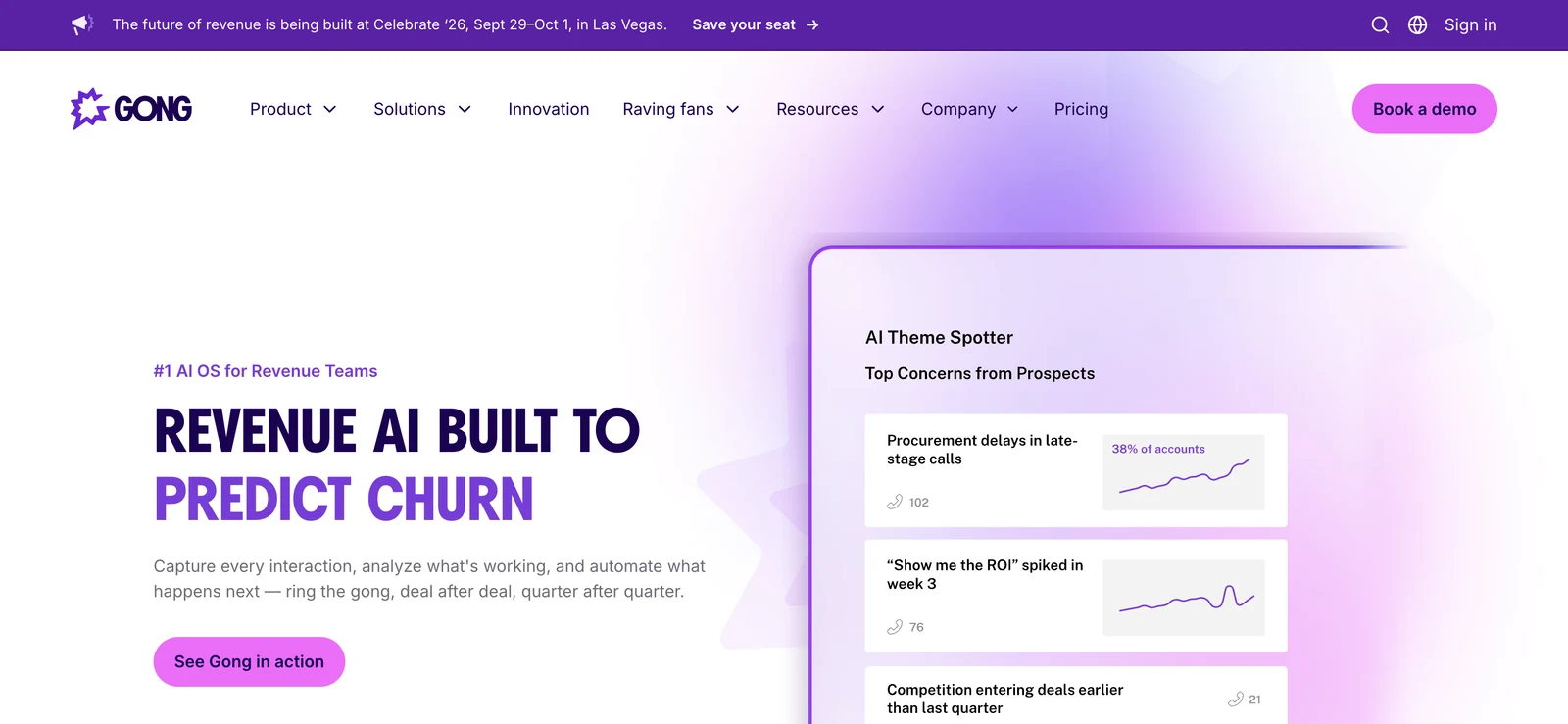
Gong describes call recording as the capture and storage of phone, web conference, or VoIP conversations. Its system adds transcripts, topic tags, action items, and risk signals to that archive.
Managers can search calls by rep, account, deal stage, or keyword. That gives a sales leader a way to inspect how reps handle objections and which stakeholders appear in active deals.
Gong’s research position also includes AI Composer, AI Tasker, and Ask Anything. These functions support automated workflows and questions about revenue conversations. Post-call summaries can reduce the need for a rep to write notes from scratch.
That is useful for coaching at scale. A manager cannot join every call, but a searchable call library can show patterns across the team. New hires can review selected examples instead of relying only on training slides.
The key limit is timing. Most of the value arrives after the conversation. If a rep needs help answering an objection while the buyer is still speaking, post-call analysis cannot change that moment. Teams must also set consent rules and access controls before recording customer calls.
Gong makes sense when conversation review and deal evaluation are the main goals. VibeSell is a closer fit when the team needs live guidance plus approved CRM updates during the same meeting.
5. Outreach, High-Volume Sales Execution
Outreach is built for high-velocity teams that need sales execution across prospecting, engagement, and forecasting.
Its research profile includes AI Revenue Agent, AI Deal Agent, and AI Research Agent. Those agents point to a broad workflow, where the system helps sellers research accounts, manage deals, and work through revenue tasks.
This kind of setup can suit a larger SDR operation with repeatable motions. For example, a team may have a defined target market, a set outreach cadence, and managers who inspect activity against clear rules.
Outreach can also help bring structure to handoffs. An SDR may qualify an account, then pass it to an account executive with a defined next action. The value depends on clean process design. Automation cannot fix unclear ownership or poor qualification.
Smaller startups should look closely at adoption effort. A high-volume sales system may be more system than a founder needs. If the team has only a few sellers, a simpler CRM and meeting assistant may produce faster gains.
Pick Outreach when outbound volume and repeatable execution are already central to the sales model. Do not buy it only because the word AI appears in the product story.
6. Salesforce Einstein, Built-In Intelligence for Salesforce Teams
Salesforce Einstein fits teams that already run their sales process in Salesforce and want intelligence inside that CRM.
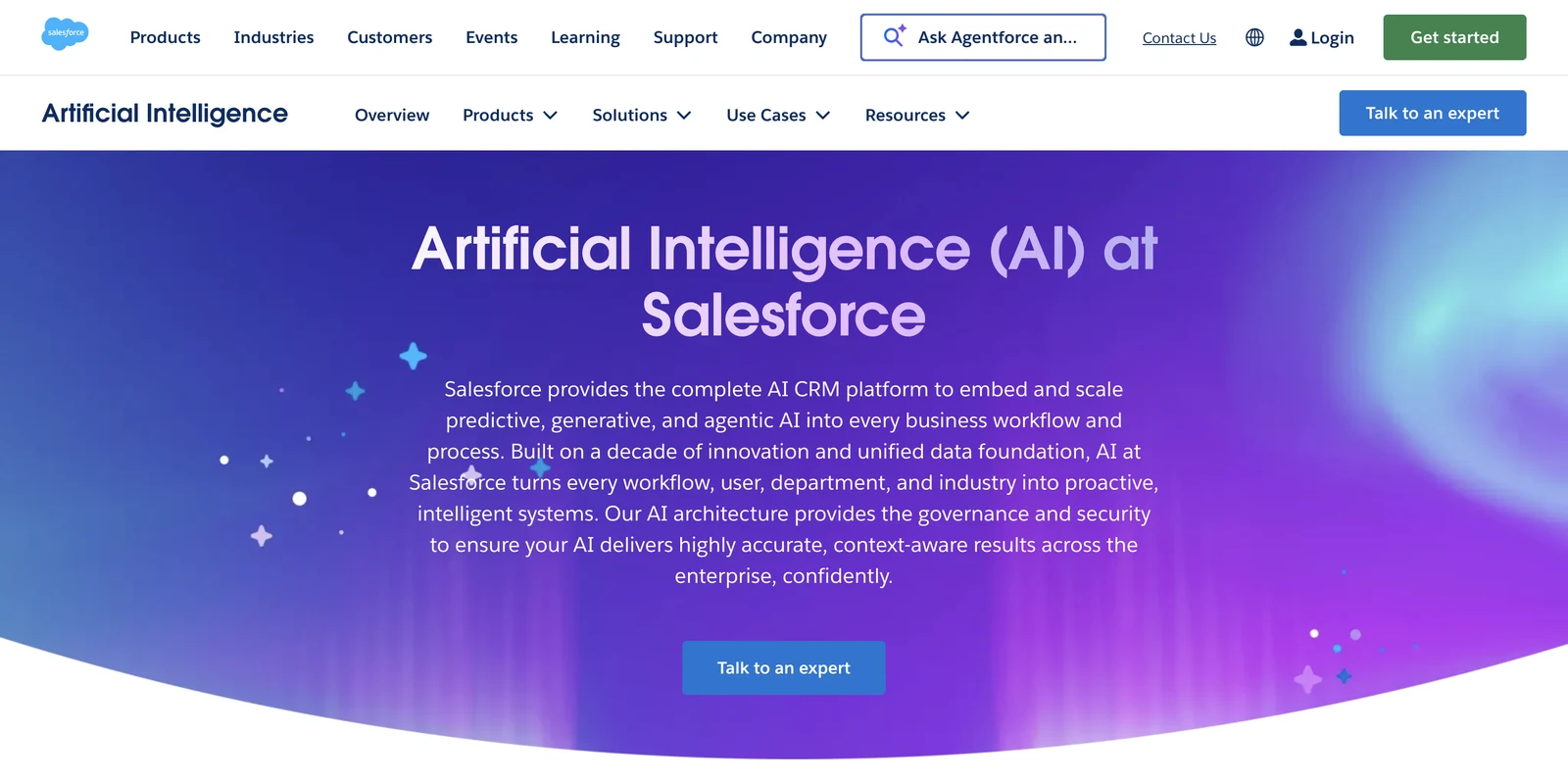
The research profile lists predictive lead scoring and next-best-action recommendations within Sales Cloud. That keeps the analysis close to the records sellers already use.
Predictive scoring can help a team sort attention when many leads enter the system. Next-action guidance can also give managers a shared way to define what should happen after a lead changes stage.
The benefit is less tool switching. A rep does not need to open a separate intelligence product to review the data that drives a CRM action. For teams with strong Salesforce discipline, that can make adoption easier.
The limitation is equally clear. Einstein is a Salesforce-centered choice. Teams on HubSpot or a lighter CRM may need a different path. Also, recommendations are only as useful as the records behind them. Missing close dates, weak stage definitions, and stale lead fields will reduce trust.
Use Salesforce Einstein when Salesforce is already the system of record and lead prioritization is the pain. It is not a replacement for meeting prep, live objection help, or post-call drafting.
7. HubSpot Sales Hub, A Usable CRM-Centered Stack
HubSpot Sales Hub suits small to mid-market teams that already use HubSpot for marketing and want sales work in the same system.
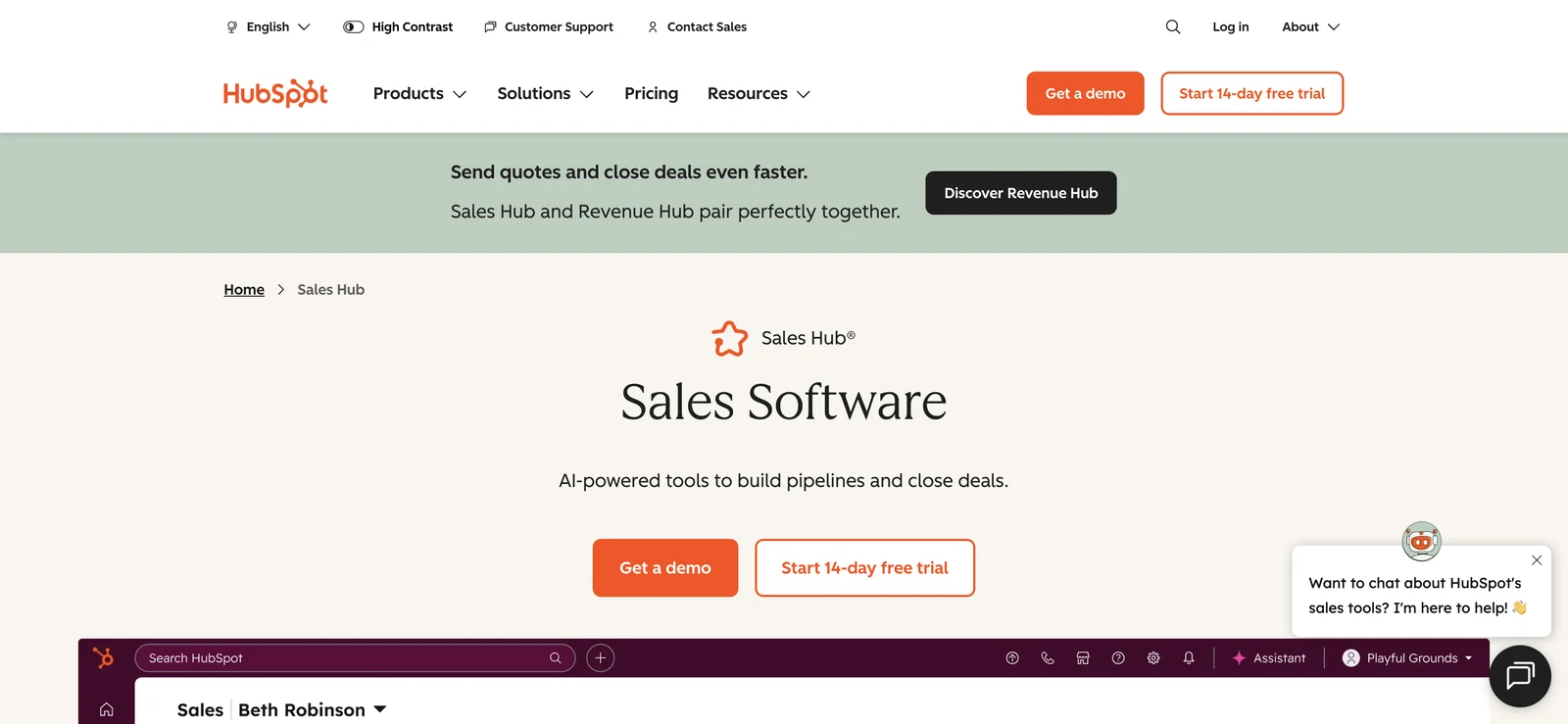
Its research profile includes the Breeze Prospecting Agent, Breeze Customer Agent, AI Meeting Assistant, and predictive lead scoring. HubSpot is also the CRM integration listed for the product.
This can work well when marketing creates inbound interest and sales needs a clear handoff. A lead can move from a form or campaign into a sales workflow without forcing the team to maintain separate records.
The meeting assistant angle matters for smaller teams. Founders and early account executives often handle calls, notes, follow-up, and CRM work themselves. A CRM-centered stack can give them one place to track the deal after the conversation.
Still, one system can become crowded. Teams should decide which fields matter before turning on more automation. Keep the required fields short. Define when a human must review an AI suggestion. Otherwise, reps may spend their time correcting records instead of selling.
HubSpot Sales Hub is a strong fit when inbound demand and CRM continuity matter most. If live guidance is the main requirement, pair the CRM with a meeting-focused tool rather than expecting the CRM to do every job.
Key Takeaway: Start with the sales moment that costs your team the most time. A prospecting tool cannot fix weak discovery, and a forecast tool cannot replace clean deal notes.
8. Clari, Revenue Forecasting for Scaling Sales Teams
Clari is designed for RevOps leaders who manage the full revenue cycle and need a more consistent forecast.
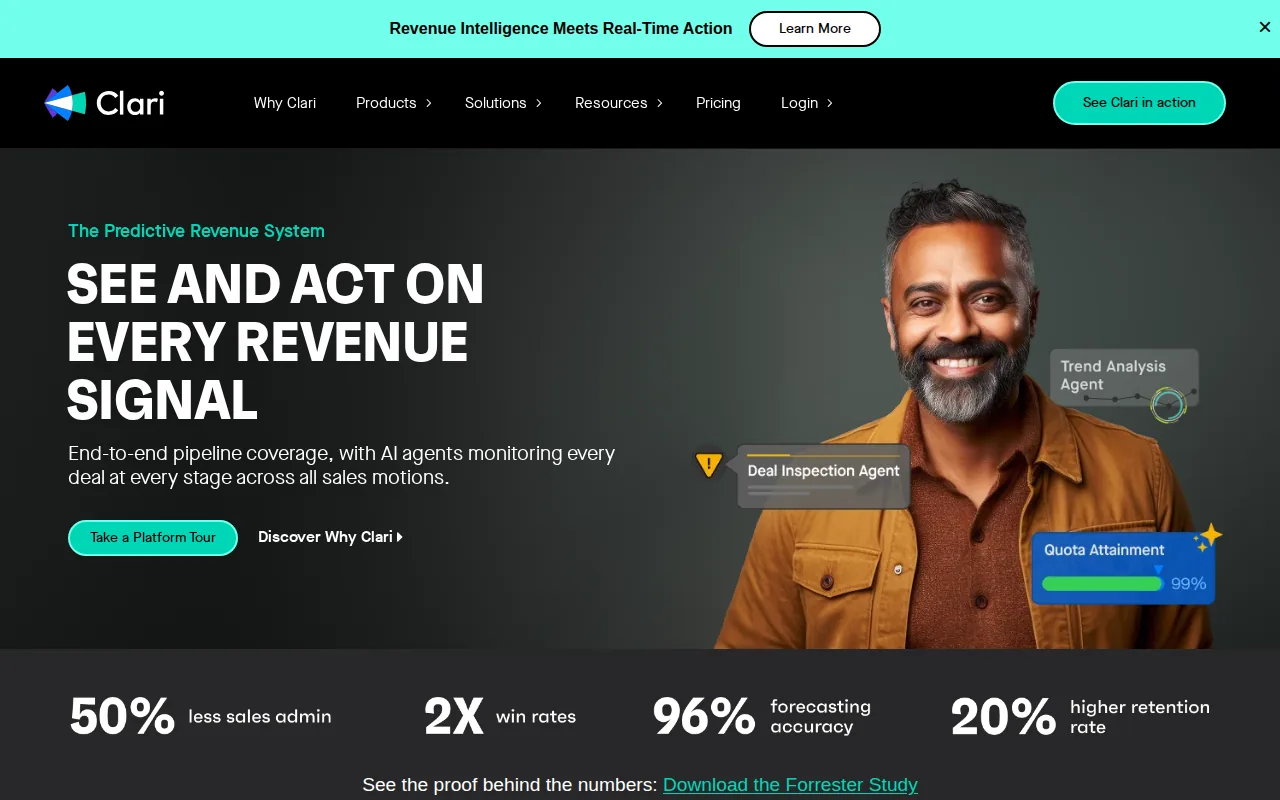
Clari says its AI predicts deal outcomes by connecting past and present data. It pulls revenue signals into one view, which reduces the need for spreadsheet-based rollups.
The platform also includes RevAI (Revenue AI Agents) and RevDB (Revenue Database) infrastructure.
These capabilities support revenue data management and forecasting workflows.
That matters once a startup has several segments, products, or regions. A founder may once have known every deal. A CRO with a larger team needs shared definitions, repeatable reviews, and a way to see why a forecast changed.
Clari’s value depends on the quality of connected data. If reps update stages late or managers accept optimistic close dates, the system still has a weak base. Forecast software should support inspection, not hide the need for good sales habits.
Use Clari when forecasting has become a leadership problem. It may be too much for a small team that still needs a clear sales process and reliable CRM use first.
Sales tools often touch sensitive customer data, so define access before rollout. The CRM record centers on managing a company’s interactions with current and potential customers. Your tool choice should support that record, not scatter key facts across private notes and disconnected apps.
Startups also need a plan for the work around sales. A clear website and landing page can improve the quality of inbound conversations, while growth leaders may benefit from personalized coaching for growth leaders when the team moves beyond founder-led selling.
Compare the 8 Sales Tools for Startups
Use this view to match the tool to the bottleneck, not to a long feature list. The right choice may be one core system plus one focused add-on.
| Tool | Best fit | Main job | Watch for |
|---|---|---|---|
| VibeSell | B2B teams with 10 to a few hundred reps | Live meeting guidance and approved CRM updates | Not a prospect database or dialer |
| Apollo | Lean prospecting teams | Data and engagement | Review data quality and privacy workflow |
| ZoomInfo | Growing teams needing account data | Enrichment and seller direction | May exceed a small team’s needs |
| Gong | Teams focused on call review | Conversation intelligence after calls | Live guidance is a separate need |
| Outreach | High-volume sales operations | Sales execution and agent workflows | Requires clear process ownership |
| Salesforce Einstein | Existing Salesforce teams | Scoring and next-action guidance | Depends on Salesforce data quality |
| HubSpot Sales Hub | Small to mid-market HubSpot teams | CRM-centered sales work | Keep automation rules simple |
| Clari | Scaling RevOps teams | RevAI and RevDB infrastructure | Needs reliable stage and forecast data |
How to Choose Among These Sales Tools
Choose the tool that removes a named bottleneck from this week’s workflow. Write down the task, owner, system of record, and expected proof before a demo.
For meeting prep
test how quickly a rep can get account context before a call.
For live calls
check whether prompts help without pulling attention away from the buyer.
For CRM work
confirm that AI drafts updates for approval instead of writing unchecked data.
For prospecting
test contact coverage in your target market and region.
For coaching
ask how managers find moments worth reviewing across many calls.
For forecasting
check which data sources feed the forecast and who owns corrections.
Do a short pilot with real calls. Measure time spent on admin, completion of follow-ups, CRM freshness, and rep adoption. Avoid promises about revenue lift until your own data supports them.
FAQ
Conclusion
For B2B teams that lose time to meeting prep, live call uncertainty, and CRM admin, VibeSell is the most direct place to start. Run a short live trial with a small group of reps, review the approved updates, and check whether follow-up work drops. If forecasting or prospecting is the bigger issue, choose the tool in this list that matches that job.


