
Best Sales Productivity Tools for B2B Teams


TL;DR
Compare top sales productivity tools for B2B teams, from AI meeting assistants to CRM and enablement platforms. Find the right fit for your sales org.
Finding time to sell is hard when admin steals the day. Below is a shortlist of sales tools for startups and growing teams that actually free up reps and give managers the visibility they need.
1. VibeSell: Real-time support before, during, and after meetings
VibeSell is an AI sales assistant software solution that reads a rep’s calendar, builds a pre‑call brief, and offers sparse live guidance while the buyer talks. It then drafts a summary, follow‑up email and CRM updates that the rep must approve.

Who benefits most? CROs and enablement leads with 10‑to‑few‑hundred reps who spend hours on note‑taking and manual CRM work. The tool shines when a team needs consistent meeting prep without building separate lists.
Why it earns a spot: the calendar‑driven research eliminates the need for manual prospect look‑ups, so every scheduled call arrives with fresh company and attendee intel. During the call, VibeSell surfaces objection handlers only when the buyer pauses, keeping the rep focused on the conversation. After the call, the drafted CRM changes and email stay in the rep’s control, preventing accidental data loss.
One caveat: the desktop client is still early, so only meetings scheduled through VibeSell get the full feature set.
Pro Tip: Run a quick practice call in VibeSell before a big demo. The AI buyer mirrors the real prospect’s tone, so you can test your pitch without pressure.
VibeSell also learns from each meeting, refining its guidance to match the team’s specific methodology. That self‑improving loop means the assistant gets sharper over months, unlike static competitors.
VibeSell provides calendar‑driven briefs before meetings, helping reps prepare without manual research. Teams comparing AI sales assistant software should also check whether live guidance, approval-gated CRM updates, and meeting continuity are included.
2. Gong: Conversation intelligence for coaching and deal visibility
Gong records and analyzes every customer interaction, turning raw calls into actionable insights. It surfaces buyer intent, flags stalled deals, and surfaces winning behaviors for managers to coach at scale.
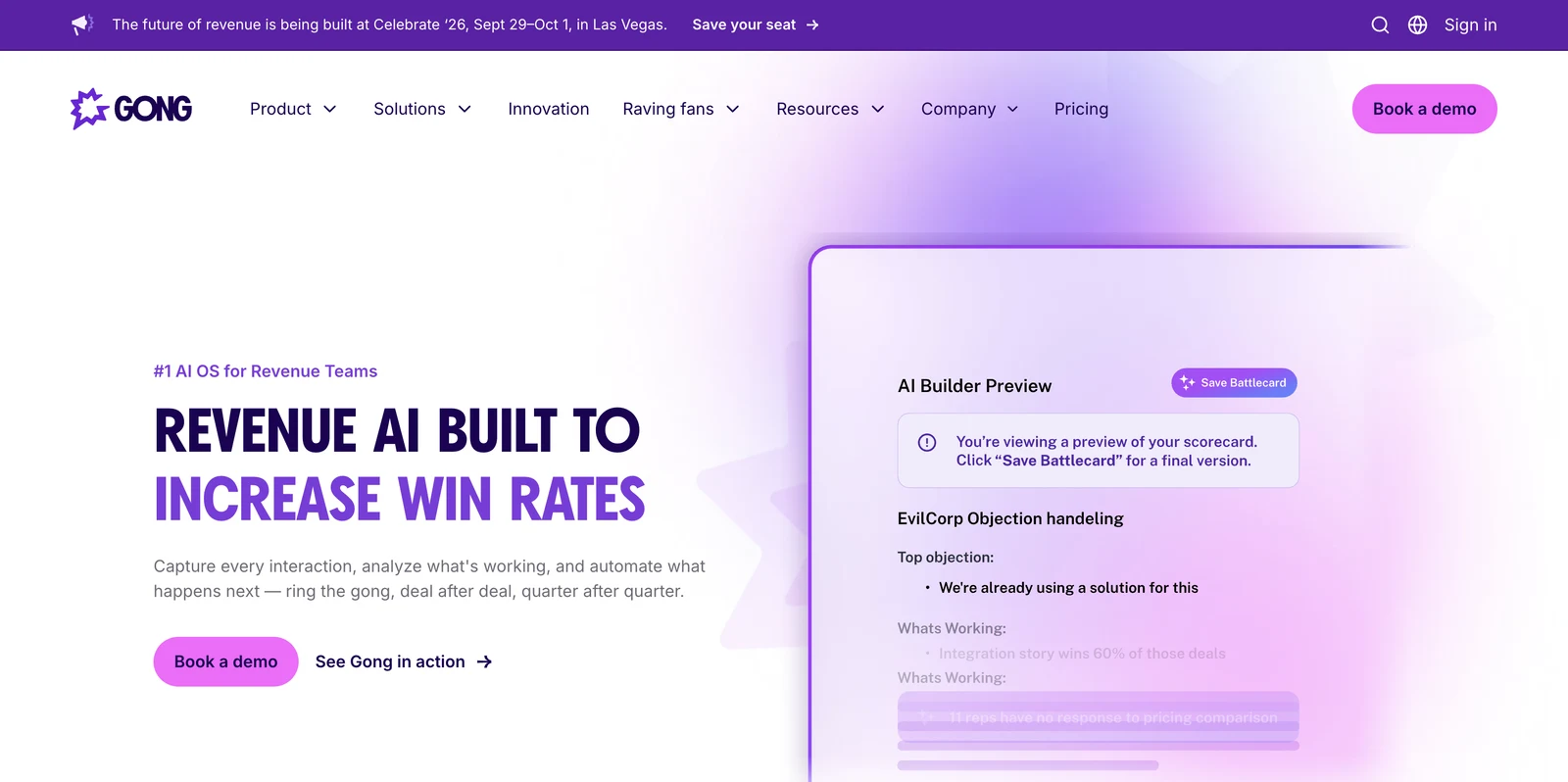
Best fit: Teams that want deep post‑call analysis and AI‑driven forecasting. Gong shines for B2B orgs with complex sales cycles where every nuance matters.
Key reasons to consider Gong: the platform captures the full truth of each conversation, then tags topics, risks and action items in near‑real‑time. Managers can spot at‑risk deals early and run focused coaching sessions based on actual data, not gut feel.
Limitations: guidance arrives after the call, so reps can’t change the conversation in the moment.
Gong helps teams use conversation insights to identify deal risks and support coaching.
3. Salesforce Sales Cloud: A flexible system of record for larger teams
Salesforce Sales Cloud is a cloud‑based CRM that centralizes accounts, contacts, opportunities and activity data. It lets sales orgs build custom objects, automate workflows and run AI‑powered forecasts.
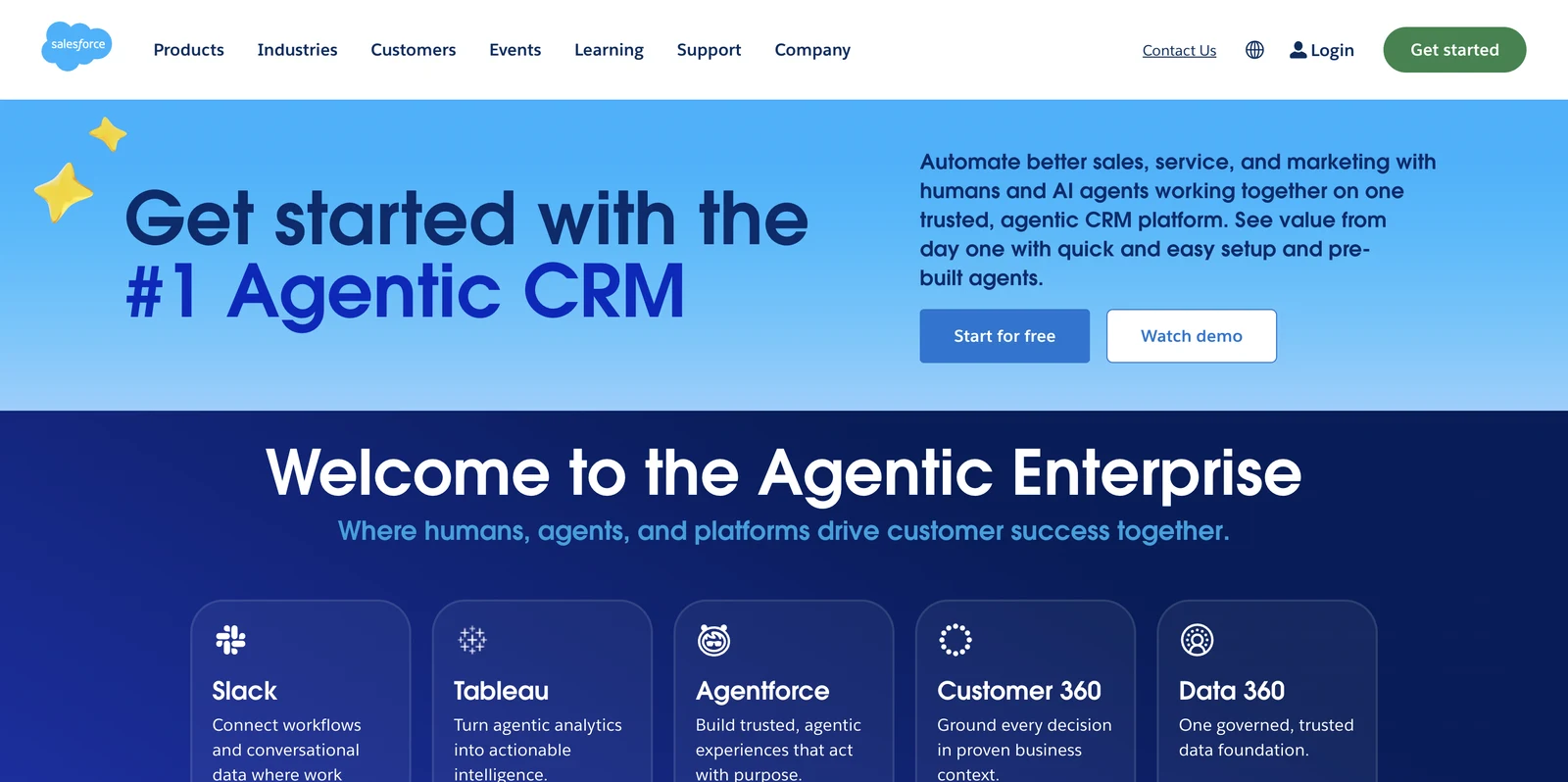
Ideal for: Mid‑market and enterprise teams that need a strong system of record and deep integration with other business apps.
Why it matters: the platform’s agentic AI can automate lead qualification, predict deal closure likelihood and personalize every customer interaction. Its extensive ecosystem means you can add modules for service, marketing or commerce without leaving the platform.
One drawback: the breadth of features can overwhelm small teams, and licensing costs rise with add‑ons.
Salesforce Sales Cloud can help centralize CRM updates and support workflow automation.
4. HubSpot Sales Hub: Accessible CRM automation for growing teams
HubSpot Sales Hub is a CRM-based sales platform that combines pipeline management, email tracking, sequences and sales automation.
Who it serves: SMB and mid‑market teams that want an easy-to-adopt platform with built‑in automation and a single source of truth for contacts, companies and deals.
Key strengths: the UI is praised for low learning curve, so reps adopt it quickly. AI‑driven “Breeze” assists with email drafts, prospecting suggestions and deal scoring, giving reps a few extra minutes each day.
Caveat: the content management side is limited compared with dedicated enablement suites, so larger orgs may outgrow it.
5. Outreach: Structured sales execution for prospecting and engagement
Outreach is an engagement orchestration platform that unifies prospecting, multi‑channel outreach and deal execution. It lets reps build cadences, track responses and automate follow‑up tasks.
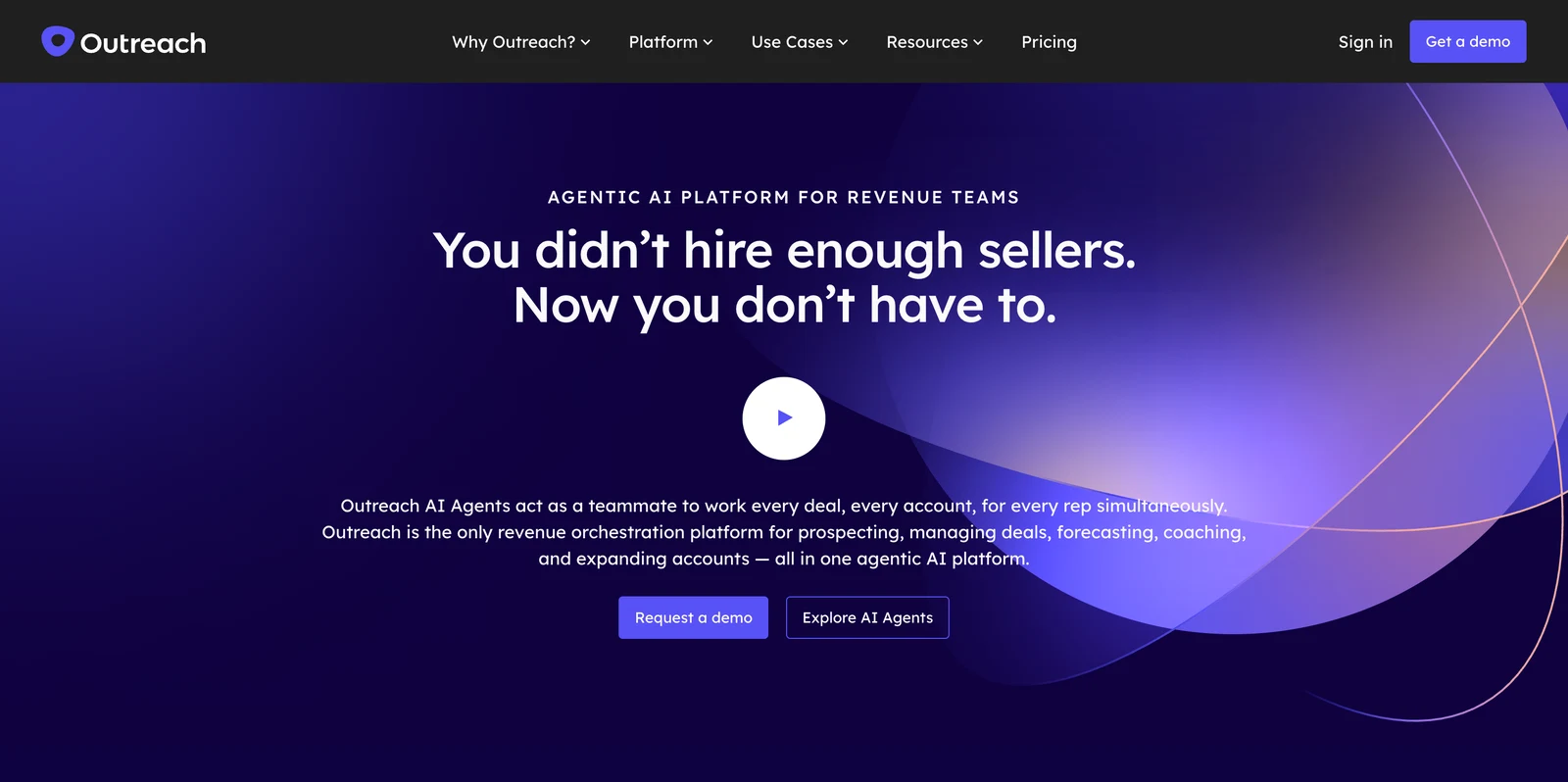
Best for: Teams that want a single platform to manage outreach, meetings and post‑call actions without stitching together separate tools.
Why it stands out: the AI “Agentic” engine can prioritize tasks based on real‑time engagement signals, so reps focus on the hottest prospects. The platform also feeds activity data back into the CRM, keeping the system of record up to date.
Limitation: it does not provide live in‑call guidance, so reps still need a separate tool for meeting‑time assistance.
6. Highspot: Enablement content, playbooks, and coaching in one platform
Highspot is a sales enablement solution that stores content, builds playbooks and delivers micro‑learning at the point of need.
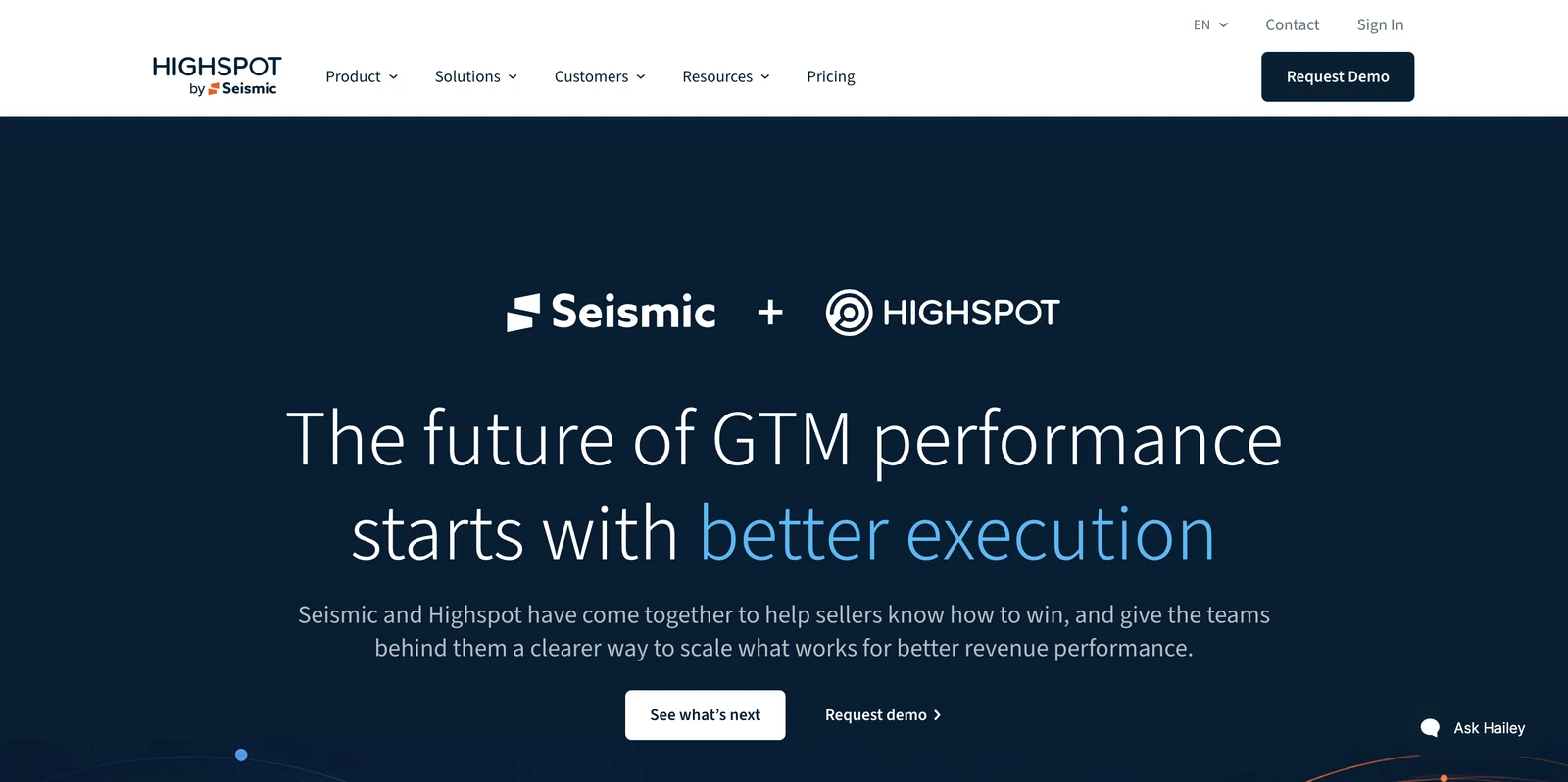
Target audience: Enablement‑driven teams that need a centralized library and analytics on which assets actually move deals forward.
Why include it: AI recommends the most relevant piece of content based on the buyer’s stage, and managers can see which decks or case studies drive the highest conversion. The platform also tracks playbook adherence, feeding data back to coaching programs.
Drawback: it does not handle prospecting or call recording, so you’ll pair it with a separate engagement or conversation‑intelligence tool.
Enablement platforms like Highspot tend to earn their keep when content recommendations are paired with proper coaching, so plan the rollout around both.
Sales productivity tools compared by team need
Below is a quick matrix that matches each tool to the primary time sink it addresses. Use it to spot the biggest gap in your current workflow and compare it with other sales productivity tools for startups and growing teams.
| Tool | Primary Use | Best For |
|---|---|---|
| VibeSell | Live meeting guidance & calendar briefs | Teams needing consistent prep and in‑call assistance |
| Gong | Post‑call analysis & coaching | Org that values data‑driven coaching |
| Salesforce Sales Cloud | Full‑stack CRM & AI forecasting | Large enterprises needing deep customization |
| HubSpot Sales Hub | Easy‑to‑adopt CRM automation | SMBs & mid‑market teams |
| Outreach | Unified outreach orchestration | Teams wanting one‑stop prospecting platform |
| Highspot | Content enablement & playbooks | Enablement‑focused orgs |
Key Takeaway: If meeting prep and live guidance are your biggest pain, VibeSell delivers those capabilities in a single, approval‑gated workflow.
How to choose the right tool
- Identify the biggest time sink on your reps’ days , admin, prospecting, or content search.
- Match that sink to the primary use column in the table above.
- Check integration depth: does the tool sync with your CRM and calendar without extra data entry?
- Run a pilot with a small group and measure reclaimed selling hours. Teams can also review sales tools for startups by workflow before selecting a broader platform.
Pro Tip: Combine a meeting‑centric tool like VibeSell with an enablement platform such as Highspot for end‑to‑end productivity.
Ready to stop losing hours to admin? VibeSell - Experience Real-Time Intelligence for Sales
FAQ
Conclusion
For B2B teams that lose the most time to meeting prep and admin, VibeSell offers the most complete real‑time solution. Leaders comparing AI sales assistant software should measure time saved, CRM update accuracy, and rep attention during customer conversations.


