
Best AI Sales Assistant Software: 10 Picks


TL;DR
Compare the best ai sales assistant software for prospecting, outreach, call coaching, meeting summaries, CRM automation, pricing, and team fit.
AI can cut sales admin fast, but the wrong tool adds one more tab to manage. These options are organized by the job they handle, the teams they suit, and where setup gets hard. Here are the best AI sales assistant software picks for prospecting, outreach, live call help, meeting notes, and CRM work.
1. VibeSell
VibeSell is a browser-based AI sales assistant for live coaching, meeting summaries, and CRM-connected insights during sales calls.
It fits sales professionals, account executives, technical founders, and small business development teams that want help during the call itself. A pre-call brief gives you instant context before the meeting. During the talk, VibeSell provides real-time guidance. Afterward, it captures the key notes and follow-up work.
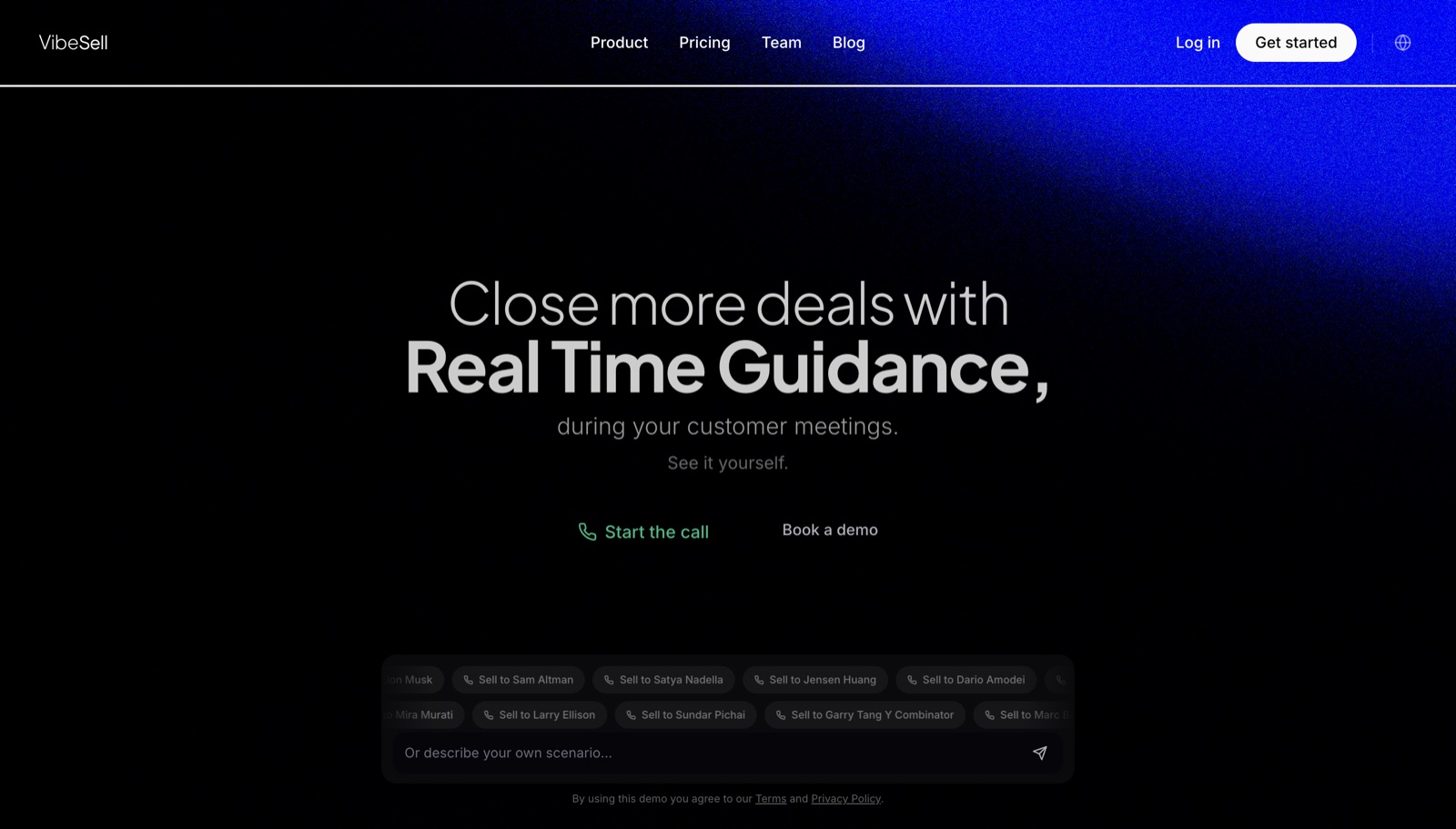
That full meeting loop is why VibeSell takes the first spot here. Many tools focus on one slice, such as email scoring or lead enrichment. VibeSell connects preparation, live help, and post-call admin in one browser-based workflow.
The CRM point matters for small teams. A vague claim about “many integrations” doesn't tell you if notes really reach the right record. For small teams, integration clarity matters more than a long list with no proof of sync.
VibeSell also targets zero setup. You don't need to build a large data workflow before your next call. You can test the flow with a live trial and see if the meeting brief, real-time guidance, and summary fit your sales motion.
The caveat is scope. VibeSell is built around sales conversations, not a giant prospect database or a high-volume outbound engine. If list building is your main problem, pair it with a data tool. If calls are where deals stall, start with VibeSell.
2. Clay, Flexible enrichment and outbound automation
Clay is an AI sales assistant for high-volume outbound teams with the technical skill to build and maintain enrichment workflows.
Clay suits teams that want to pull data from many sources and shape it into a custom prospecting process. Its strength is flexibility. A revenue operations lead can set rules that react to account events, rather than waiting for a rep to spot them by hand.
One cited workflow uses triggers tied to events such as a funding round or an executive hire. When the event appears, the account can be flagged for outreach. That gives the team a reason to contact the account instead of sending the same message to every company.
Clay also fits teams that already know how to manage data sources, fields, and handoffs. The upside is a tailored process. The cost is upkeep. Someone must check source quality, revise rules, and fix workflows when the sales process changes.
Pricing varies by plan, credits, and usage. Ask who will own the workspace before you buy. A flexible system with no owner soon becomes a fragile one.
Choose Clay when data enrichment is the center of your sales motion. Choose VibeSell when the bigger gap is what happens before, during, and after a sales meeting.
3. Apollo, Prospecting and sequencing in one platform
Apollo is an AI sales assistant for SMB and mid-market teams that want prospecting and outreach in one place.
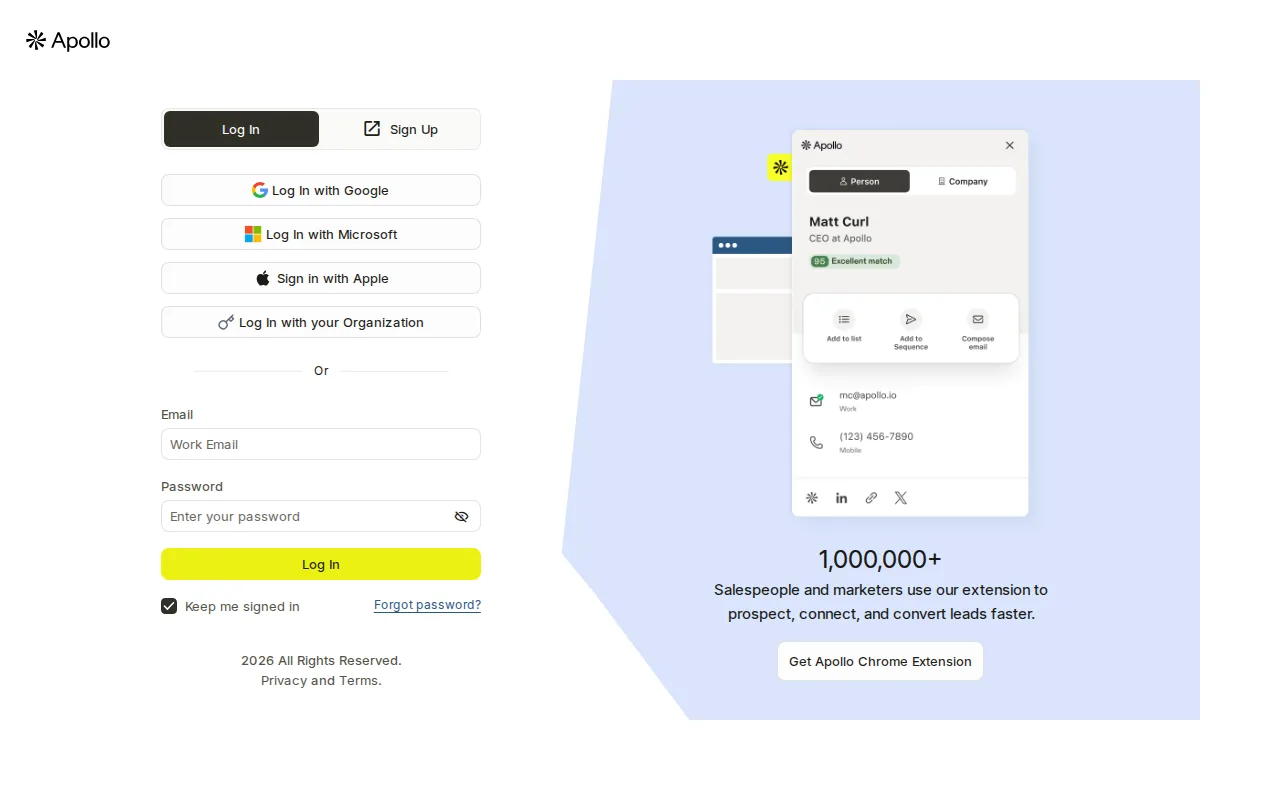
It works best when your team wants to find prospects and move them into an outreach sequence without building separate data infrastructure. The research context points to sequencing plus light AI personalization for automated outreach sequences.
That combination can cut the handoff between list research and first contact. A rep can work from a defined target list, add personalization, then place contacts into a sequence. Managers can also keep the process more consistent across a small team.
Apollo is less suited to a team whose main need is live help on discovery calls. Sequencing can get a prospect to the meeting, but it won't replace good questions, sharp listening, or a useful post-call record.
Pricing depends on the plan and contact needs. Review data access, sending limits, and CRM behavior before you compare monthly costs. A low entry price can look different once your team needs more records or more automation.
Use Apollo when your bottleneck is getting qualified names into a repeatable outbound motion. Use VibeSell once those prospects start taking meetings and reps need instant context.
4. ZoomInfo, Enterprise intent data and account signals
ZoomInfo is an AI sales assistant for enterprise sales organizations that can support intent data and a larger account research operation.
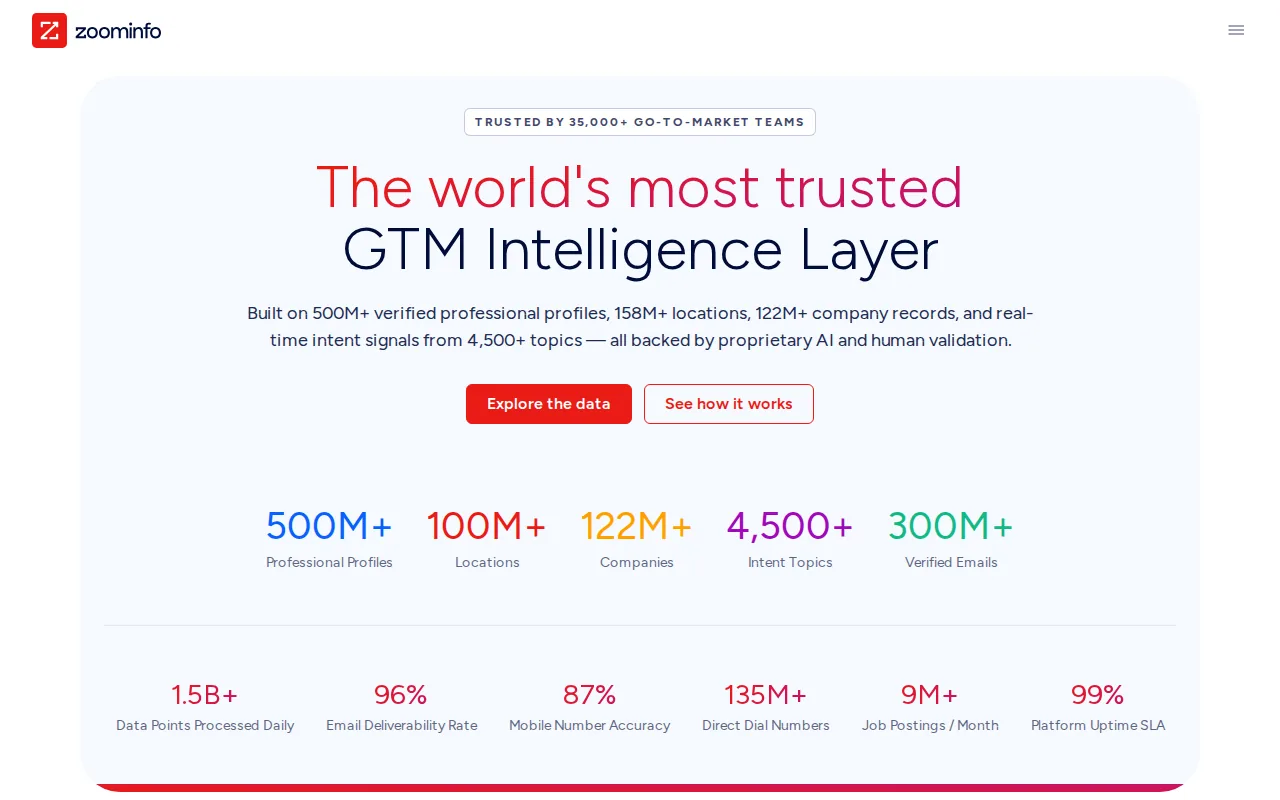
Its best fit is a company with enough sales headcount to justify an annual commitment and enough process to act on account signals. The research context highlights intent signals that can flag companies researching topics related to your offer.
That signal can help a team decide where to spend research time. Instead of treating every account as equally warm, a manager can direct attention toward companies showing relevant activity. The signal still needs human review. Interest in a topic does not prove budget, authority, or buying timing.
ZoomInfo makes more sense for an account-based motion than for a solo founder doing a small number of highly personal calls. It can be too much system for a lean team that mainly needs help remembering what happened in yesterday's meeting.
Pricing is based on the agreement and use case. Ask about contract length, data coverage in your target market, and how signals reach the CRM. Those details shape the cost more than a simple seat count.
If your sales org has a data team, ZoomInfo may help with account selection. If the pain starts when the call begins, a meeting-first assistant is a cleaner fit.
5. Cognism, Verified data for European sales teams
Cognism is an AI sales assistant for teams selling into European markets where data checks and GDPR concerns come first.
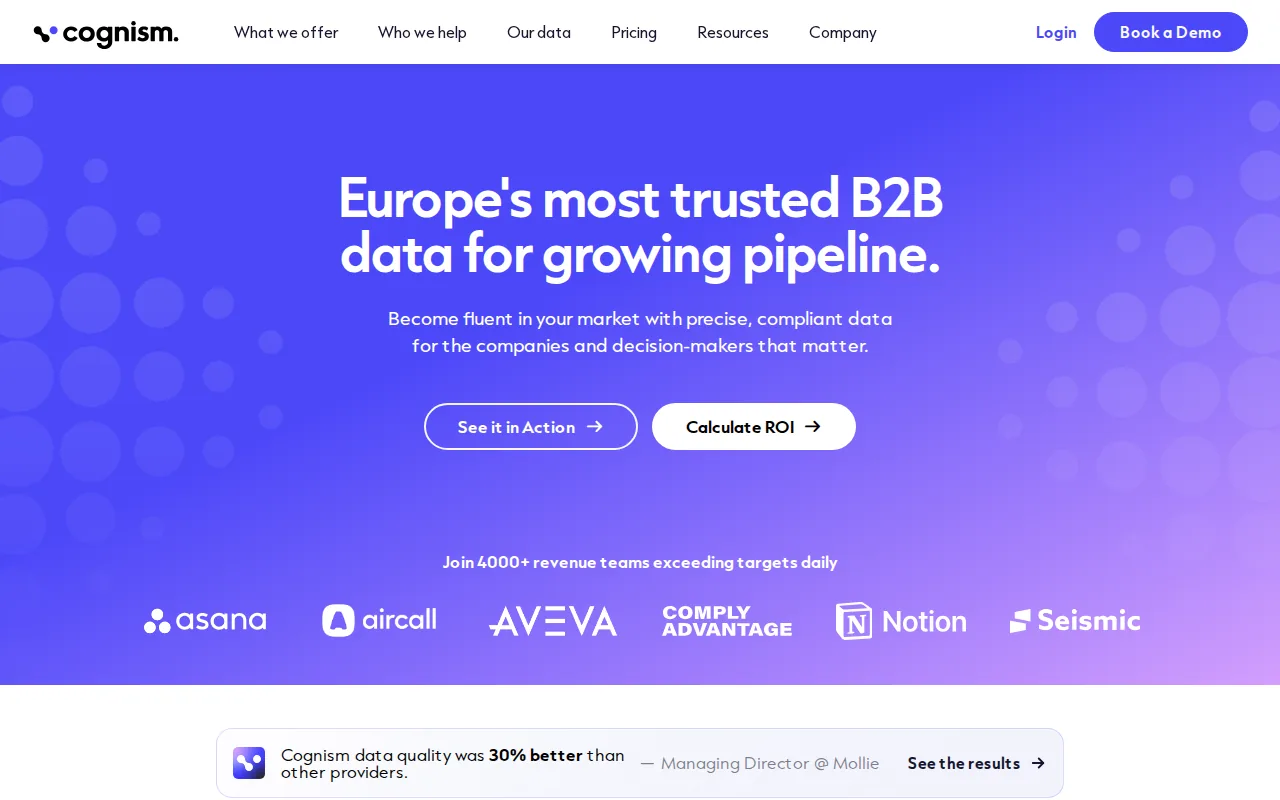
It fits revenue teams that need verified mobile data and a way to define their ideal customer profile. The research context describes an AI Sales Companion that defines an ICP, then surfaces similar accounts with live signals.
That workflow can help a team start with its best current accounts instead of a vague market label. The system's value depends on the quality of the target market and the care taken with regional rules.
European coverage is the key reason to consider Cognism. A database that looks strong in one region may be less useful in another. Before signing, test a sample of accounts from the countries and industries you actually sell into.
There is also a data quality caveat. Treat any enrichment result as a lead for review, not as a fact that needs no check.
Cognism is a data choice. It doesn't replace a live meeting coach or an assistant that turns a call into clear next actions. For that part of the workflow, VibeSell stays more focused.
6. Fyxer, Inbox management and contextual replies
Fyxer is an AI sales assistant for reps with busy inboxes where response speed and a steady voice affect conversion.
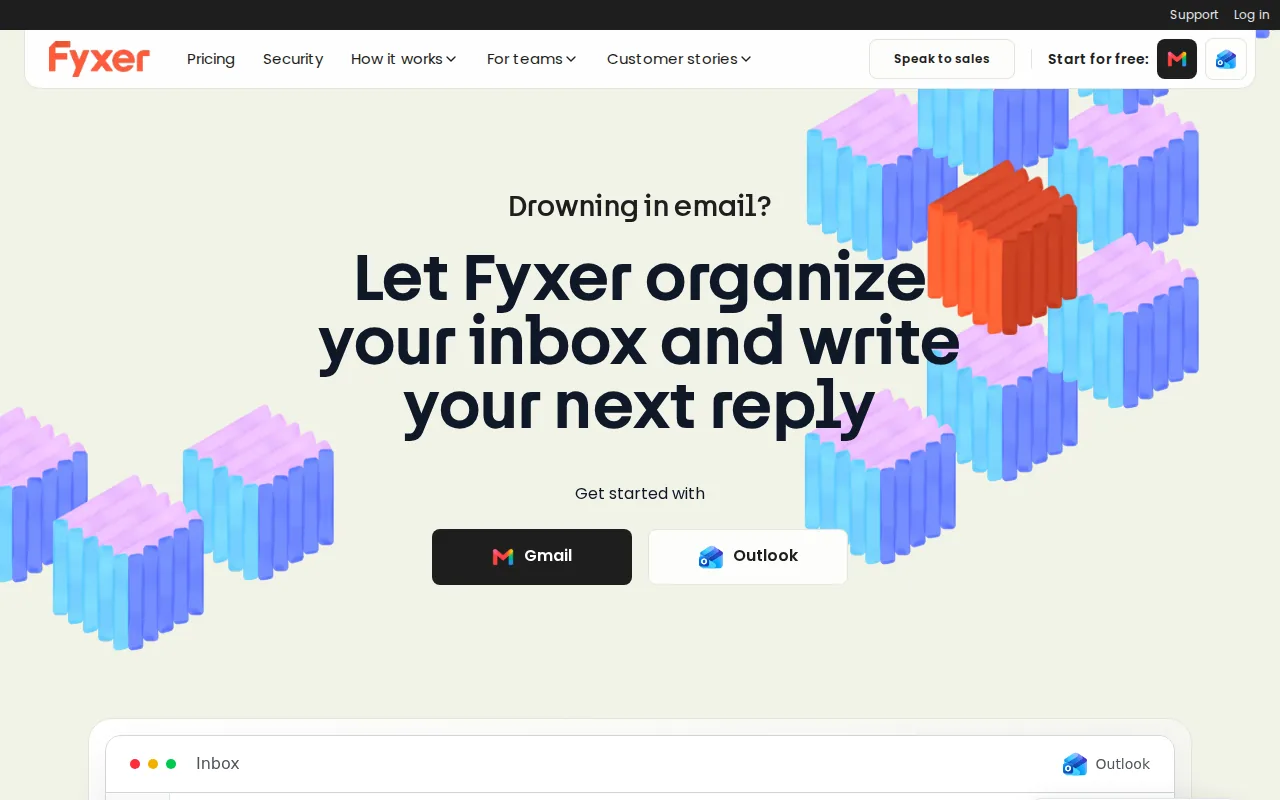
It is best for account executives and sales reps who spend too much time sorting messages. Fyxer can prioritize email and draft replies with context for inbound messages. That lets a rep review the draft rather than start with a blank page.
The review step matters. A generated reply may miss a pricing detail, promise too much, or sound unlike the person sending it. Keep the human approval step, especially when the message covers a contract, product limit, or sensitive customer issue.
Fyxer is a good fit when the inbox is the work queue. It is less useful if your main need is prospect discovery, intent data, or coaching during a live objection.
There is a related option in the same research set, Fyxer Notetaker, which handles call transcription and structured follow-up drafts. Teams that want inbox work and meeting notes in one connected system may look at that workflow separately.
Pick Fyxer when email delay is costing you attention. Pick VibeSell when the harder moment is the live conversation and the handoff after it.
7. Lavender, Real-time cold email coaching
Lavender is an AI sales assistant that scores cold emails while reps write them and suggests changes before they send.
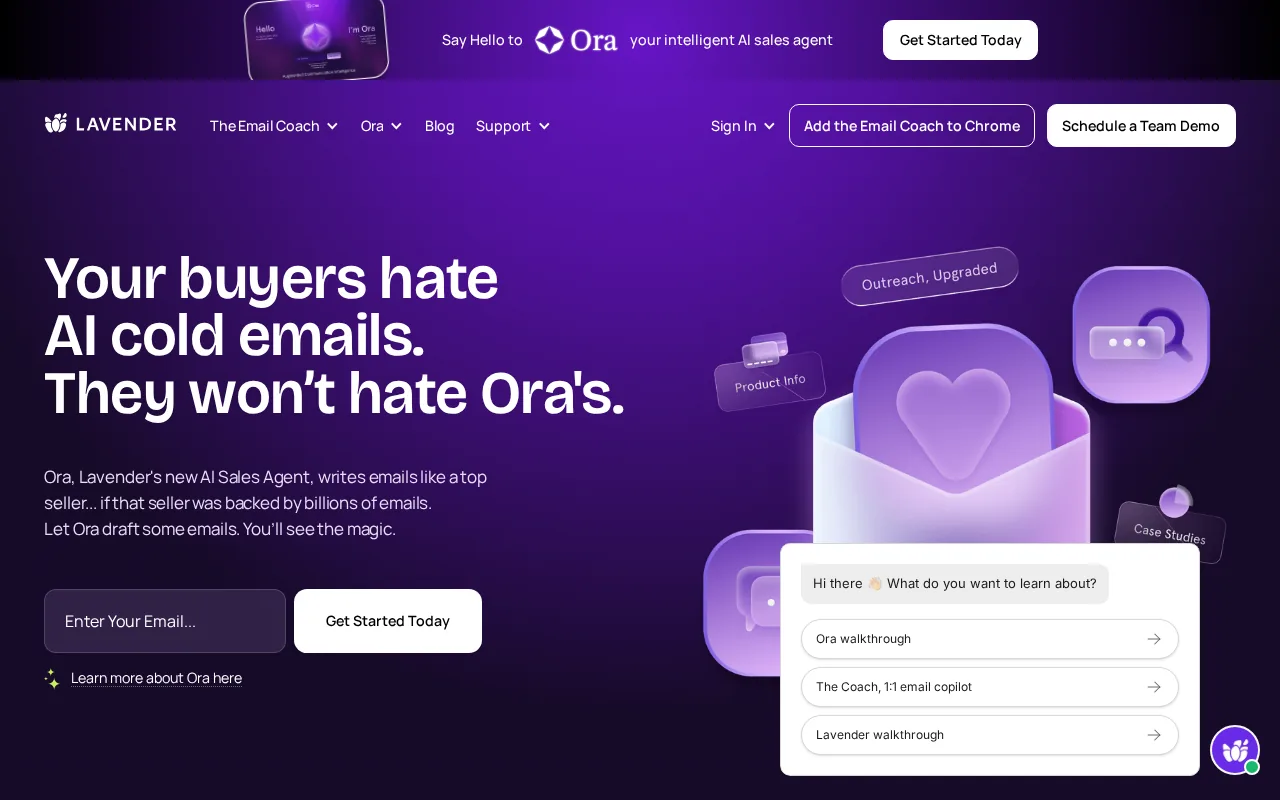
It suits SDRs who are still building cold-email judgment. It also helps experienced reps who want a quality check before sending at volume. The research describes real-time email scoring plus AI suggestions in the draft window.
That makes Lavender different from a tool that writes a complete message and walks away. The rep sees feedback during the writing process. Over time, the team can spot patterns in weak subject lines, long copy, or unclear requests.
The limitation is obvious but important. Better email does not fix a bad target list. It also doesn't coach a rep through a live call. VibeSell's coaching sits inside the meeting workflow.
Lavender works well as a focused email layer. It may be all you need if your team already has meeting notes and CRM sync under control.
Key Takeaway: Email coaching improves the message before the meeting. Live meeting coaching helps when the buyer changes the plan in real time.
8. Regie.ai, Standardized multichannel outreach sequences
Regie.ai is an AI sales assistant for teams that want consistent outreach across several reps and channels.
It is best for sales leaders who need a shared standard for messaging. The research context points to automated sequences across email and LinkedIn, with A/B variations. That gives managers a way to test outreach without asking every rep to build a new process from scratch.
Consistency can help during onboarding. A new rep starts with an approved sequence and can learn from the changes the team makes later. But standardization has a downside. A sequence that works for one segment can sound wrong for another.
Keep a human review point before a sequence goes live. Check claims, proof points, and opt-out language. Also watch deliverability. More automation does not mean every message belongs in a prospect's inbox.
Regie.ai is a fit for a managed outbound program. It is less suited to a founder who has a few high-value calls and needs better preparation for each one.
9. Gong, Conversation intelligence and deal-risk coaching
Gong is an AI sales assistant for enterprise teams that need call analysis, coaching at scale, and deal-risk visibility.
It is built for sales leaders who want patterns across many conversations. The research context describes automated analysis that flags deal risks, buyer sentiment, and coaching patterns. That can help a manager find weak discovery habits without sitting in every call.
Gong is also a serious operating commitment. Teams need clear rules for recording, consent, access, and review. Call-recording laws vary by location, so legal and security teams should check the workflow before rollout.
Conversation intelligence has more value when managers act on the findings. A dashboard full of risk flags won't change rep behavior by itself. Set a small review rhythm. Pick one behavior, coach it, then check whether reps use it.
Pricing is custom and depends on team size and the plan bundle. Ask for the full contract shape, not just the seat price.
Gong is the stronger match for broad enterprise coaching. VibeSell is the simpler starting point when a rep needs instant help during one call and a clean summary afterward.
10. Fireflies, Affordable call capture and CRM documentation
Fireflies is an AI sales assistant for teams that need call capture, meeting summaries, and CRM documentation without an enterprise conversation-intelligence budget.
It is best for teams that lose time to manual notes. Fireflies can transcribe calls and generate meeting summaries.
After the call, a rep can review the record, correct errors, and make sure the next task has an owner. The key word is review. Transcripts can mishear names, product terms, or commitments.
Fireflies is a sensible choice when documentation is the main gap. It is less focused on real-time coaching while the conversation is still happening. If the rep needs a prompt at the moment an objection appears, a notetaker alone won't solve that problem.
Fireflies pricing varies by plan and usage. Compare recording limits, retention rules, CRM actions, and admin controls before you roll it out across a team.
Use Fireflies for dependable capture. Use VibeSell when capture is only one part of the meeting problem.
AI sales assistant software comparison table
The best AI sales assistant software depends on where work breaks down. A prospecting tool won't fix weak call notes. A meeting coach won't build a clean account list. Use the table to match the tool to the first bottleneck you want to remove.
| Tool | Best fit | Main job | Setup pressure | Main caveat |
|---|---|---|---|---|
| VibeSell | Founders, AEs, sales teams | Live guidance and meeting follow-up | Low | Not a large prospect database |
| Clay | Technical outbound teams | Enrichment and event-based workflows | High | Needs workflow ownership |
| Apollo | SMB and mid-market | Prospecting plus sequencing | Medium | Less focused on live calls |
| ZoomInfo | Enterprise account teams | Intent data and account signals | High | Annual commitment may fit best |
| Cognism | European sales teams | Verified data and ICP discovery | Medium | Validate local data quality |
| Fyxer | Inbox-heavy reps | Priority sorting and reply drafts | Low | Needs human review |
| Lavender | Cold-email teams | Live email scoring | Low | Doesn't improve targeting |
| Regie.ai | Managed outbound teams | Multichannel sequences | Medium to high | Review tone by segment |
| Gong | Enterprise sales leadership | Conversation analysis and coaching | High | Custom pricing and governance work |
| Fireflies | Lean teams | Transcription and CRM notes | Low to medium | Limited live guidance |
A useful definition of the category comes from this explanation of AI sales assistants: the software handles repetitive work behind a sales process so reps can spend more time on buyer conversations. That distinction matters because some products assist a rep while others act with more autonomy.
For a CRM-heavy team, integration depth should come before feature count. A long integration list means little if the tool cannot write the right fields, respect permissions, or show what changed.
What to look for in an AI sales assistant
Start with one sales bottleneck, then test the full handoff around it. A tool should save work without making reps copy the same facts into another system.
Check these points before you buy:
Job fit
Decide if you need prospecting, email help, live guidance, meeting notes, or forecast risk.
CRM depth
Confirm where summaries, tasks, contacts, and opportunity updates land.
Human review
Keep approval for outbound messages, pricing claims, and sensitive records.
Data rules
Ask how recordings, transcripts, and personal data are stored and deleted.
Setup time
Identify the owner for prompts, workflows, permissions, and quality checks.
Proof
Track one measure, such as note completion, reply time, or qualified meetings.
Enterprise buyers should also test governance, audit trails, security, and measurable revenue impact. Enterprise sales automation guidance from HubSpot places those checks alongside integrations and AI transparency, which is the right standard for a large rollout.
Don't automate the human part by accident. AI can prepare the brief and catch the follow-up. Your rep still needs to earn trust, ask the next good question, and decide when a buyer is ready.
Pro Tip: Run a two-week pilot with one team. Compare the old workflow with the new one, then keep only the actions reps actually use.
FAQ
Conclusion
For most small and growing sales teams, start with VibeSell because it covers the meeting loop that scattered tools often miss: preparation, live guidance, and follow-up. Run a live trial on your next few calls, review the summaries in your CRM, and see if the workflow saves enough admin to keep.


