
Best Sales Forecasting Software for Revenue Teams


TL;DR
Compare top sales forecasting software for B2B revenue teams. See AI predictions, quota planning, pipeline forecasts, and review features to pick the right tool.
Revenue leaders need forecasts that actually work, not just spreadsheets that guess. Below is a short list of sales forecasting software that delivers real‑time insight and cuts admin load. Pick the one that fits your team’s workflow and data sources.
We analyzed 40 comments and questions from Reddit, Quora and YouTube about sales forecasting software and found that 20% mentioned complex configuration steps.
1. VibeSell
VibeSell is a real‑time AI sales companion for B2B teams. It reads the rep’s calendar, pulls attendee info, and builds a pre‑call brief with talking points, discovery questions, and recent account news. During the call it surfaces objection handling and competitor intel only when the buyer pauses, then drafts a summary, follow‑up email, and CRM updates for the rep to approve.

The biggest win is the self‑improving guidance engine. After each meeting VibeSell checks how its prompts performed and suggests sharper language or new questions. The team approves changes, so the assistant learns the exact way the organization sells. This keeps guidance from becoming generic noise.
VibeSell does not build the forecast itself. It improves what the forecast is built on: after every meeting it drafts a summary and suggested CRM updates, and the rep approves them before anything is saved. Stages, next steps and deal notes stay current for whatever forecasting tool reads your CRM. Because updates sit in a review queue, reps stay in control and never lose the conversation flow.
2. Aviso: For AI-predictive forecasting and real-time rollups
Aviso is an AI‑powered forecasting platform that rolls up rep, team, and region data in real time. Its AI‑predictive engine scores each opportunity and produces a best‑case, most‑likely, and commit forecast for the whole pipeline.
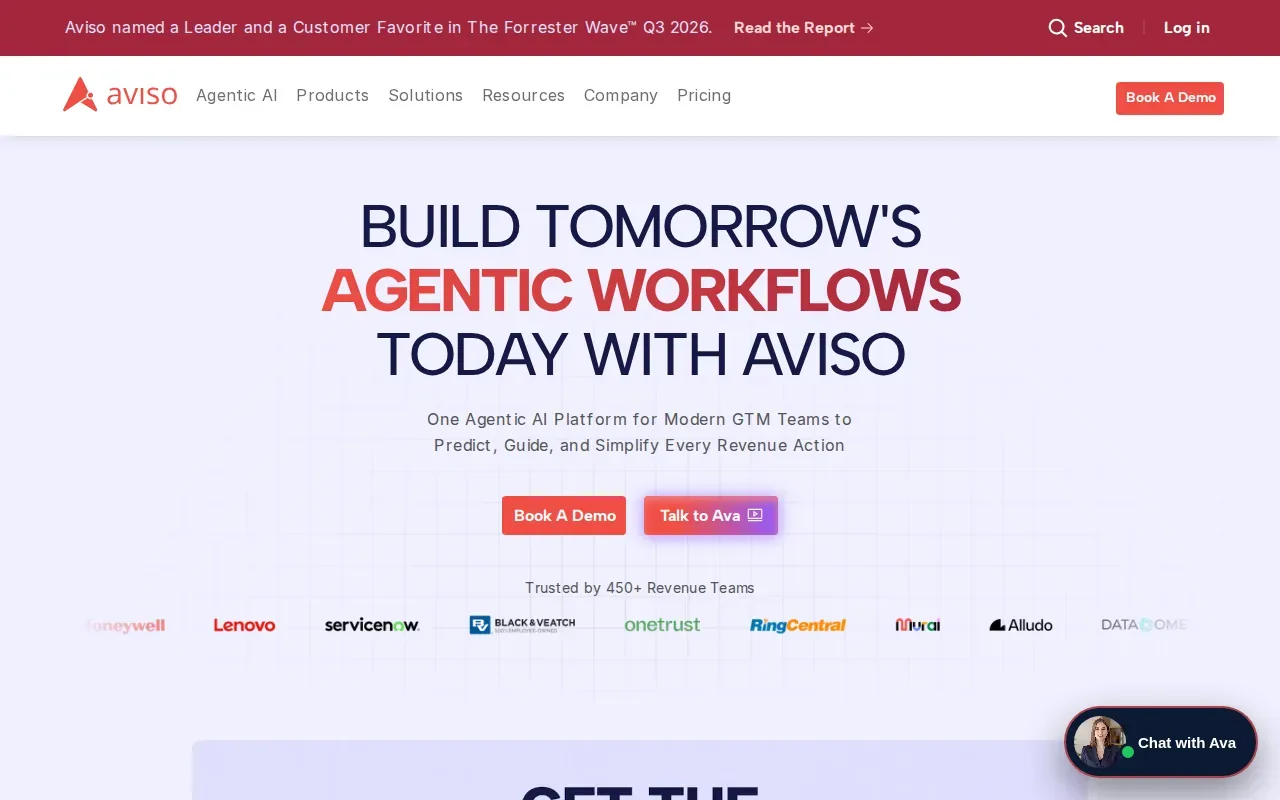
The standout feature is real‑time rollups. As deals move through stages, the forecast updates instantly, letting managers spot slipping revenue without waiting for a weekly review. Aviso also offers conversational AI that can answer “what‑if” questions during a forecast call, keeping the discussion data‑driven.
Plan time for rollout: Aviso has to be connected to your CRM and users need training before the forecasts are trusted.
3. Revenue Grid: For forecast history and variance review
Revenue Grid tracks every forecast version as a snapshot, so you can see who changed what and when. This history makes variance analysis easy. You can compare a rep’s forecast from last month to today and spot pattern shifts.
The platform works inside Salesforce, pulling live pipeline activity and applying AI signals to predict close dates. Managers get a clear view of commit, best‑case, and pipeline revenue without exporting data.
Because it lives in the CRM, there’s no separate data warehouse to sync, which reduces admin overhead.
4. Varicent: For quota‑aligned forecasts and reconciliation
Varicent turns pipeline activity into quota‑aligned forecasts through structured modeling. It links each deal to a quota plan, so managers can see exactly how a rep’s pipeline feeds into territory targets.
The key differentiator is deal‑level inspection tied to variance analysis. When a forecast changes, Varicent shows which opportunity input caused the shift, letting leaders trace the impact back to a specific deal or assumption.
Varicent also supports complex territory and incentive modeling, so you can simulate how a quota change would ripple through the organization before you commit.
Plan for setup time. Quota and territory modeling takes careful configuration before the forecasts are useful.
5. Microsoft Dynamics 365 Sales: For forecasts within a CRM workflow
Dynamics 365 Sales provides forecast hierarchies, pipeline analytics, and opportunity management all inside the Microsoft CRM. Forecast categories (commit, best‑case, pipeline) roll up through territory and manager layers, giving a shared view of expected revenue.
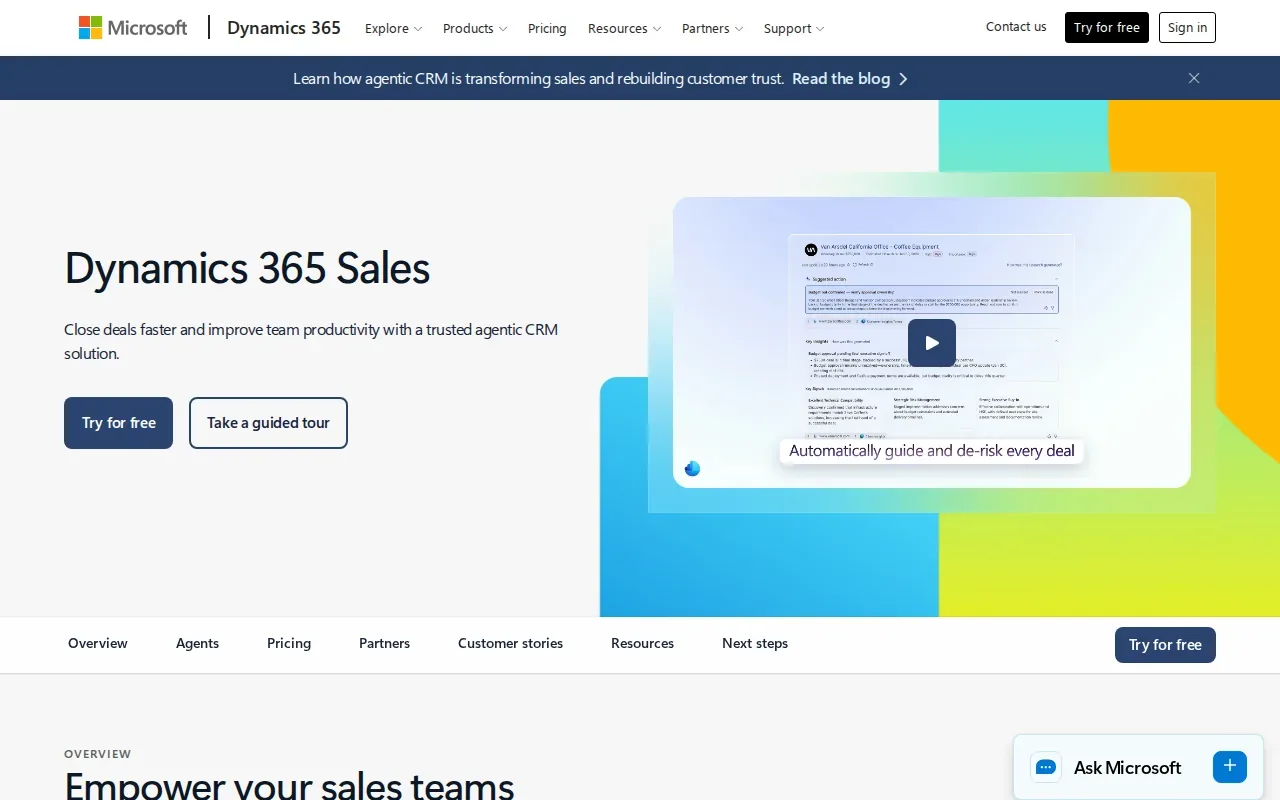
The platform integrates with Power Platform, so you can build custom dashboards or automate forecast updates with low‑code flows. This keeps the forecast tied directly to the data reps already enter.
For a deeper look at how revenue teams compare options, see our Revenue Intelligence Software Options guide.
Sales forecasting software comparison table
| Tool | Forecast method | Key differentiator | Best for |
|---|---|---|---|
| VibeSell | No built‑in forecast; keeps CRM deal data current | Self‑improving meeting assistant | Teams that need live call support and automated CRM drafts |
| Aviso | AI‑predictive | Real‑time rollups + conversational AI | Enterprises that want predictive scoring and instant forecast updates |
| Revenue Grid | Snapshot‑based revision tracking | Versioned forecasts for variance analysis | Orgs that want to review forecast history |
| Varicent | Quota‑aligned modeling | Deal‑level variance tracing | Companies that need tight quota‑to‑pipeline alignment |
| Microsoft Dynamics 365 Sales | Pipeline‑based hierarchy | Power Platform integration for custom dashboards | Teams already on the Microsoft stack |
FAQ
Conclusion
If your forecast suffers from stale or missing deal notes, start with VibeSell, so every meeting ends with CRM updates the rep has approved. For AI‑driven predictive scores, try Aviso. Set up a trial of the tool that fits your stack and see how forecast variance improves within a month.


