
Best pipeline management tools for B2B sales


TL;DR
Compare top pipeline management tools for B2B sales teams, including real‑time guidance, CRM automation, forecasting, and coaching features.
Sales leaders spend too much time on admin and too little time selling. Below is a short list of pipeline management tools that actually help reps move deals forward, and a quick guide on how to pick the right one for your team.
1. VibeSell, real-time support before, during, and after sales meetings
VibeSell is a real‑time AI sales companion that reads a rep’s calendar, pulls company and attendee data, and builds a pre‑call brief automatically. The brief shows recent news, talking points, and discovery questions tailored to the buyer.
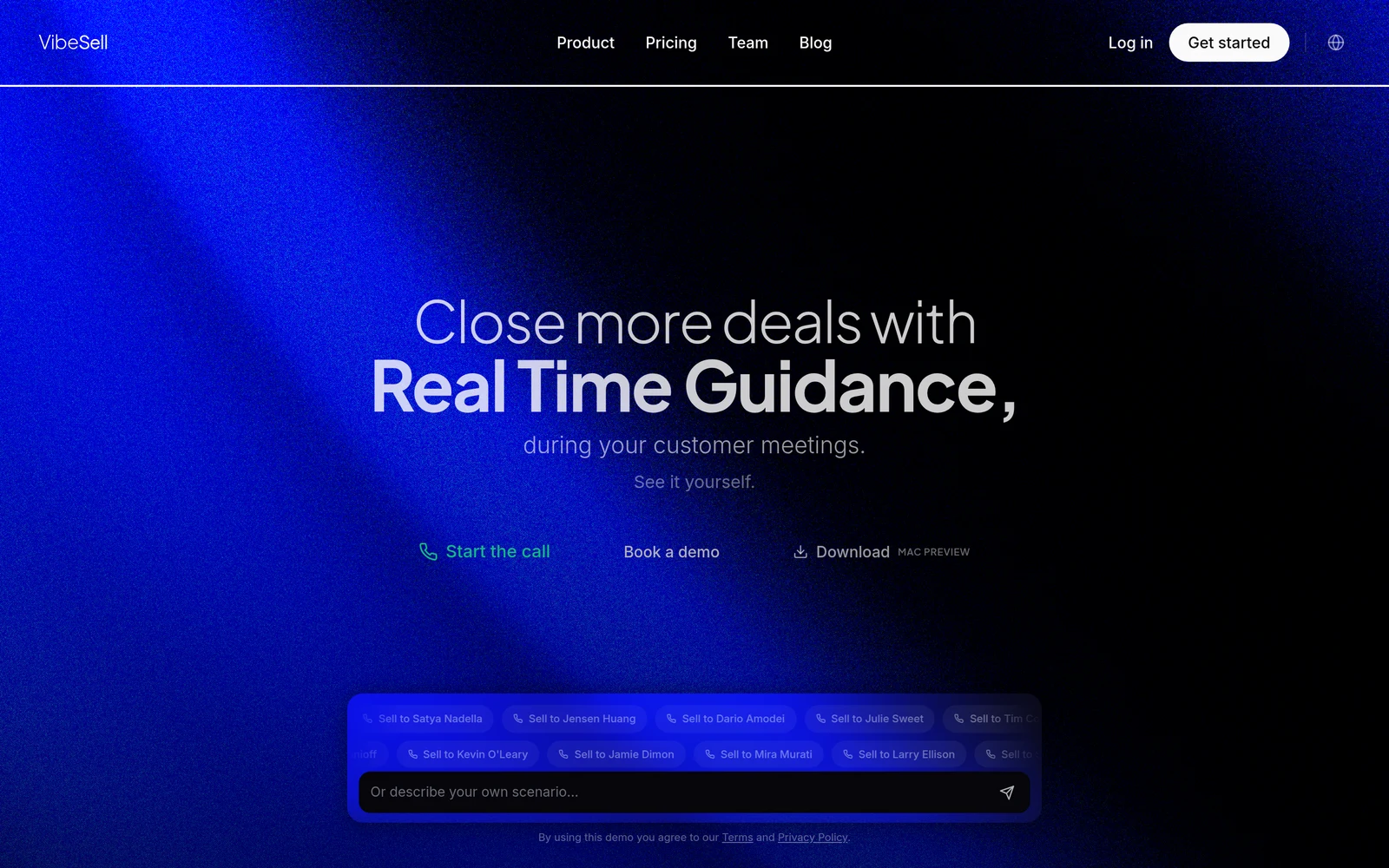
During the call, VibeSell surfaces sparse guidance, objection handling, competitor intel, next‑best‑action prompts, only when the buyer pauses. After the call it drafts a summary, a follow‑up email, and CRM update proposals that the rep must approve.
Best for midsize B2B teams that need consistent prep and want to keep reps in charge of every CRM change.
One caveat: VibeSell works only with Google Meet, Microsoft Teams, and Cisco Webex via its Chrome extension.
Best CRM automation tools for B2B sales explains how VibeSell fits into a broader automation stack.
Pro Tip: VibeSell keeps reps in charge of every CRM change.
2. Revenue.io, real-time guidance with automated activity capture
Revenue.io lives inside Salesforce and adds live deal visibility, AI‑driven deal scoring, and guided‑selling workflows. It captures activities automatically, so reps don’t have to log calls or emails manually.
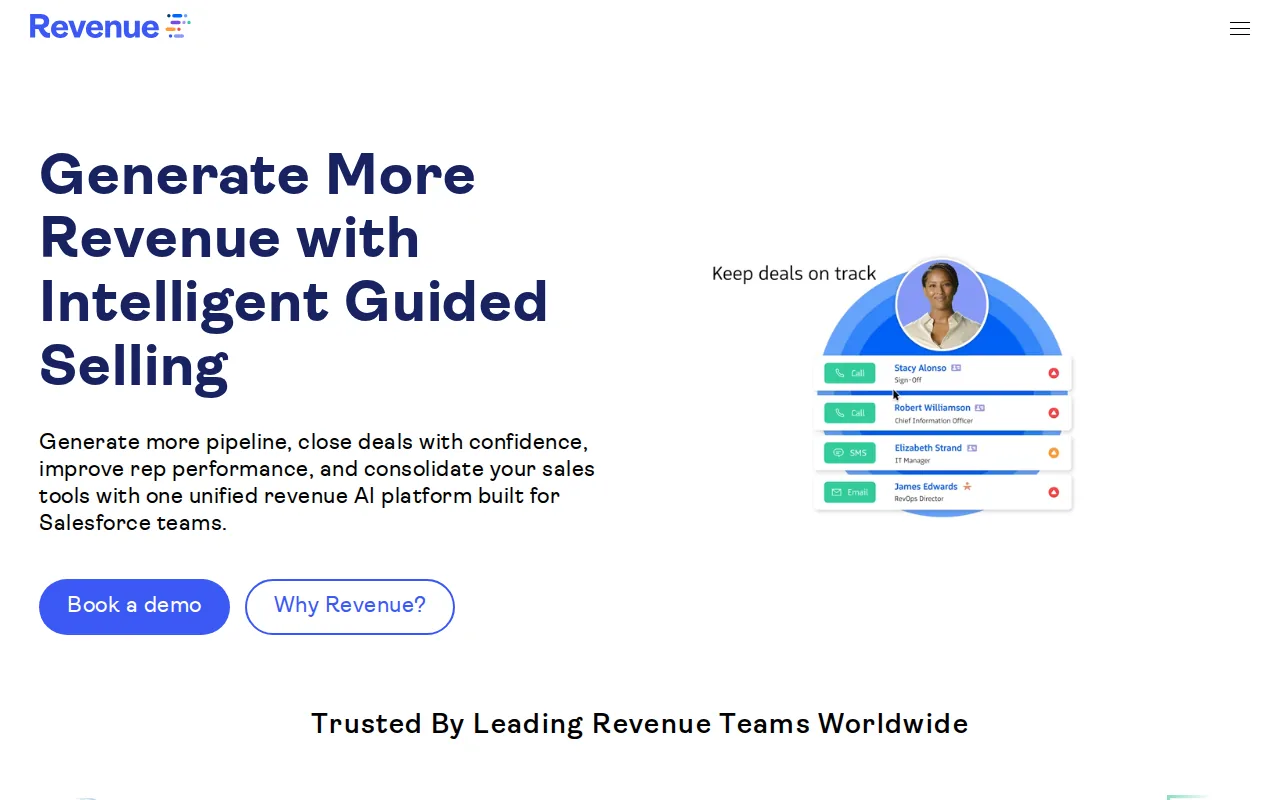
The platform flags at‑risk deals in real time and suggests the next outreach step based on historical win patterns.
Best for Salesforce‑centric teams that want coaching built directly into their CRM.
Caveat: It requires a Salesforce license and is not designed for other CRM systems.
3. HubSpot Sales Hub, accessible deal automation for growing teams
HubSpot Sales Hub bundles deal automation, email tracking, and AI‑generated insights on buying signals. It helps reps spot interested accounts and launch personalized outreach instantly.
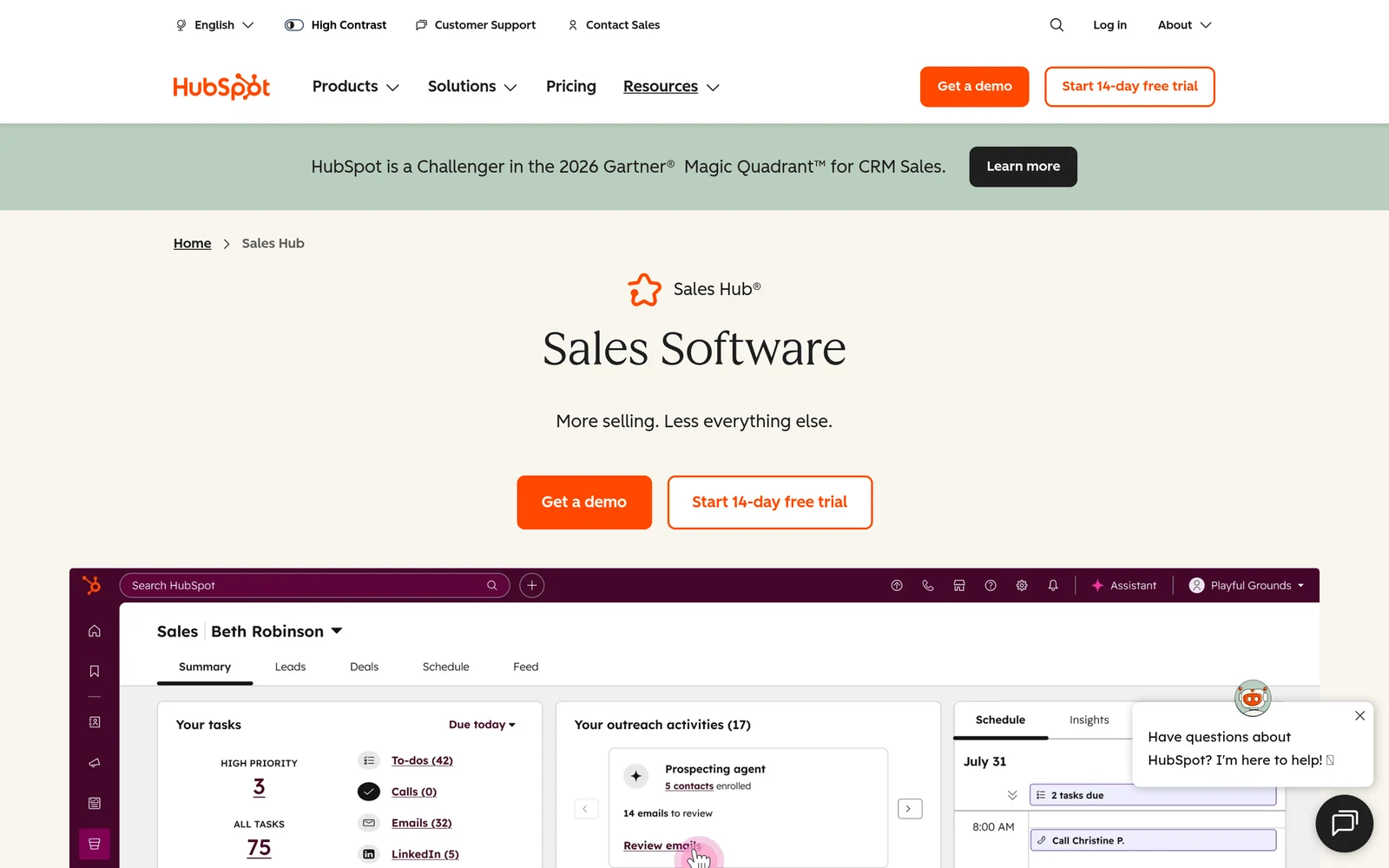
The platform is designed to keep related customer, marketing, and service data in one place.
Best for small to mid‑size teams that already use HubSpot and want a unified stack.
Limitation: It doesn’t provide live in‑call coaching; guidance arrives after the meeting.
4. Salesforce Sales Cloud, a broad CRM foundation for complex pipelines
Salesforce Sales Cloud is the market‑leader CRM that offers opportunity tracking, forecasting, and customizable dashboards. It serves as the system of record for deals of any size.
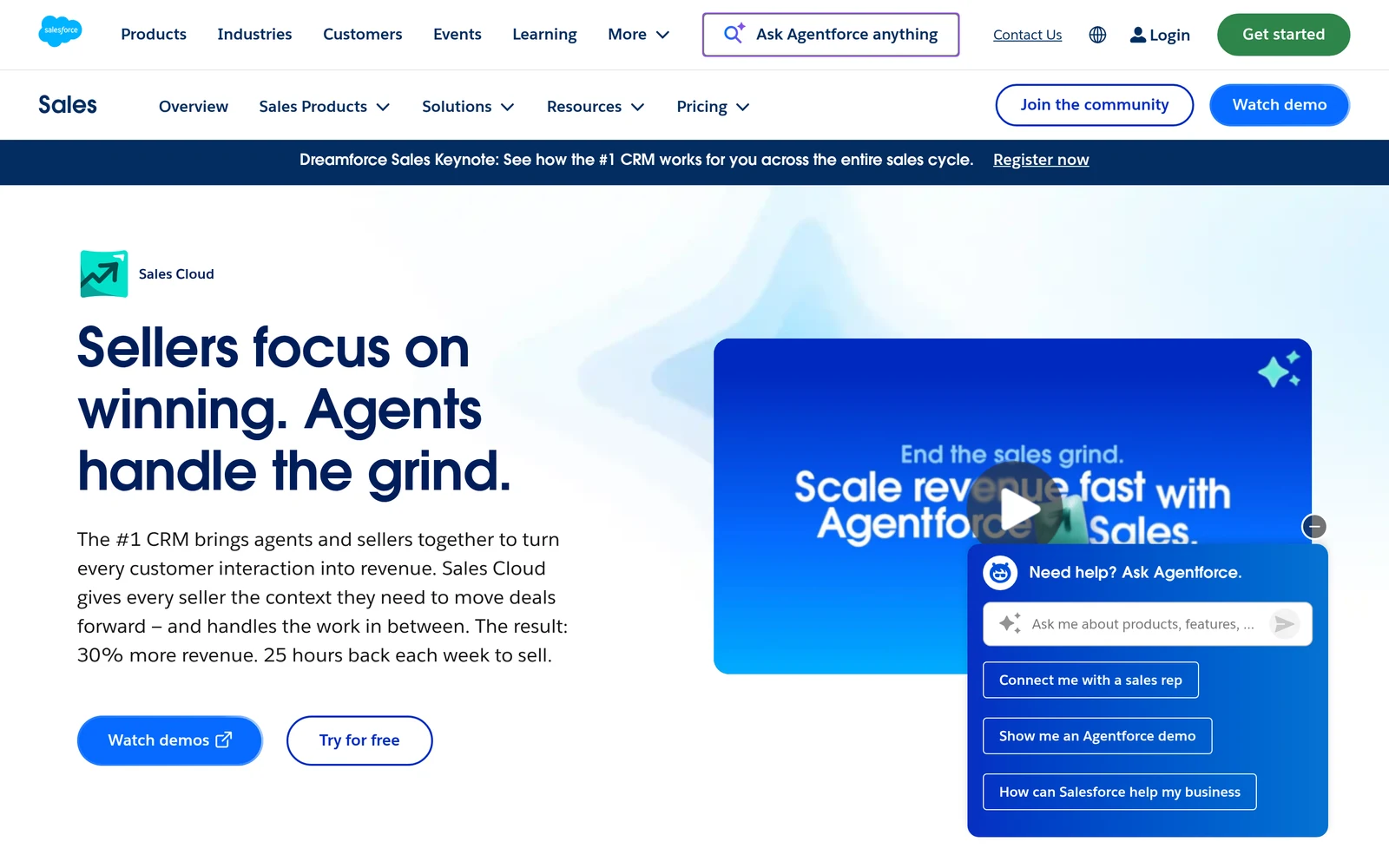
Some CRM systems offer lead and deal scoring, but Sales Cloud still requires manual updates for most automation.
Best for large enterprises that need a strong, highly customizable CRM foundation.
Drawback: Without an overlay tool like Revenue.io, reps get little real‑time coaching during calls.
A pipeline management guide explains how to set up stages and forecasts.
5. Momentum, workflow automation for keeping Salesforce data current
Momentum automates Salesforce data updates via workflows that run in real time and push notifications to Slack. It reduces the manual effort of keeping account and contact records fresh.
The tool also surfaces a simple “what’s next?” view for each rep, pulling data from the CRM.
Best for teams that struggle with stale data and need a low‑code way to keep Salesforce in sync.
Limitation: Momentum offers no live call guidance or post‑call summarization.
6. Clari, advanced forecasting and pipeline inspection
Clari aggregates Salesforce data, rep activity, and historical trends to give a single view of pipeline health. It excels at forecasting accuracy for large sales orgs.
It does not provide real‑time coaching or automated activity capture.
Best for enterprises that prioritize forecast reliability over in‑call assistance.
One downside: The UI can feel heavy for smaller teams.
7. Gong, conversation‑intelligence platform
Gong records and analyzes calls, extracting signals about buyer engagement, risk, and deal momentum. It surfaces insights after the conversation ends.
Gong does not include live guidance or workflow automation.
Best for teams that rely heavily on phone calls and want deep post‑call analytics.
Limitation: The insights arrive only after the call, so reps can’t act in the moment.
8. BoostUp, AI‑driven deal scoring and pipeline analytics
BoostUp uses AI to score deals based on Salesforce data and rep activity, helping leaders spot at‑risk opportunities early.
It focuses on analytics; it does not surface live prompts or automate post‑call tasks.
Best for revenue leaders who need predictive scoring without extra coaching layers.
Drawback: No built‑in guidance for reps during calls.
9. Outreach, sales engagement and automation suite
Outreach automates sequences, email tracking, and task creation, letting reps follow up at scale.
It lacks real‑time call coaching and deep pipeline analytics.
Best for teams that prioritize outbound cadence and need a strong sequencing engine.
Limitation: Without a dedicated AI companion, admins still handle much of the note‑taking.
10. Pipeline management tools compared, capabilities, fit, and trade‑offs
| Tool | Real‑time guidance | Post‑call analytics | Admin automation | Methodology support | Best for |
|---|---|---|---|---|---|
| VibeSell | Yes | Yes | Yes (drafts only) | MEDDIC, SPIN, BANT, Challenger | Teams that need live coaching and automated notes |
| Revenue.io | Yes | Yes | Yes (activity capture) | No | Salesforce‑centric mid‑market to enterprise |
| HubSpot Sales Hub | No | No | Deal automation | No | Growing teams on HubSpot |
| Salesforce Sales Cloud | No | No | No | No | Large orgs that need a solid CRM base |
| Momentum | No | No | Automated workflows | No | Teams that need data freshness in Salesforce |
| Clari | No | No | No | No | Enterprises focused on forecasting |
| Gong | No | Yes | No | No | Call‑heavy teams seeking post‑call insight |
| BoostUp | No | No | No | No | Leaders who want predictive scoring |
| Outreach | No | No | Yes (sequencing) | No | Teams that need outbound cadence automation |
Notice how only a handful of tools provide live guidance. If in‑call coaching is a priority, VibeSell or Revenue.io are the only options that meet that need.
How to choose a pipeline management tool
- Does your team need live, in‑call guidance? If yes, focus on VibeSell or Revenue.io.
- Are you already locked into a CRM? Choose a tool that lives natively in that CRM.
- How important is admin reduction? Look for automated activity capture or workflow automation.
- Do you follow a specific sales methodology? Pick a solution that lets you embed MEDDIC, SPIN, or custom playbooks.
- What’s your team size? Larger orgs may need forecasting depth (Clari) while smaller teams benefit from all‑in‑one platforms.
FAQ
Conclusion
If live coaching and instant note drafting matter most, VibeSell is the clear choice. VibeSell drafts a summary, follow‑up email, and CRM updates for rep approval.


