
Sales Enablement Tools for B2B Teams


TL;DR
Compare sales enablement tools for B2B teams, including AI meeting support, CRM, coaching, content, analytics, and sales engagement software.
Sales teams lose time when reps enter calls without context, hunt for content, or rebuild CRM notes after every meeting. The right sales enablement tools reduce that drag without taking control away from the rep. Here are 10 named options, with the use case, trade-off, pricing model, and team fit for each.
1. VibeSell
VibeSell is a real-time AI sales companion for B2B teams that need help before, during, and after customer meetings. It is the strongest fit for CROs, VPs of Sales, and enablement leads who want one meeting workflow instead of several point tools.
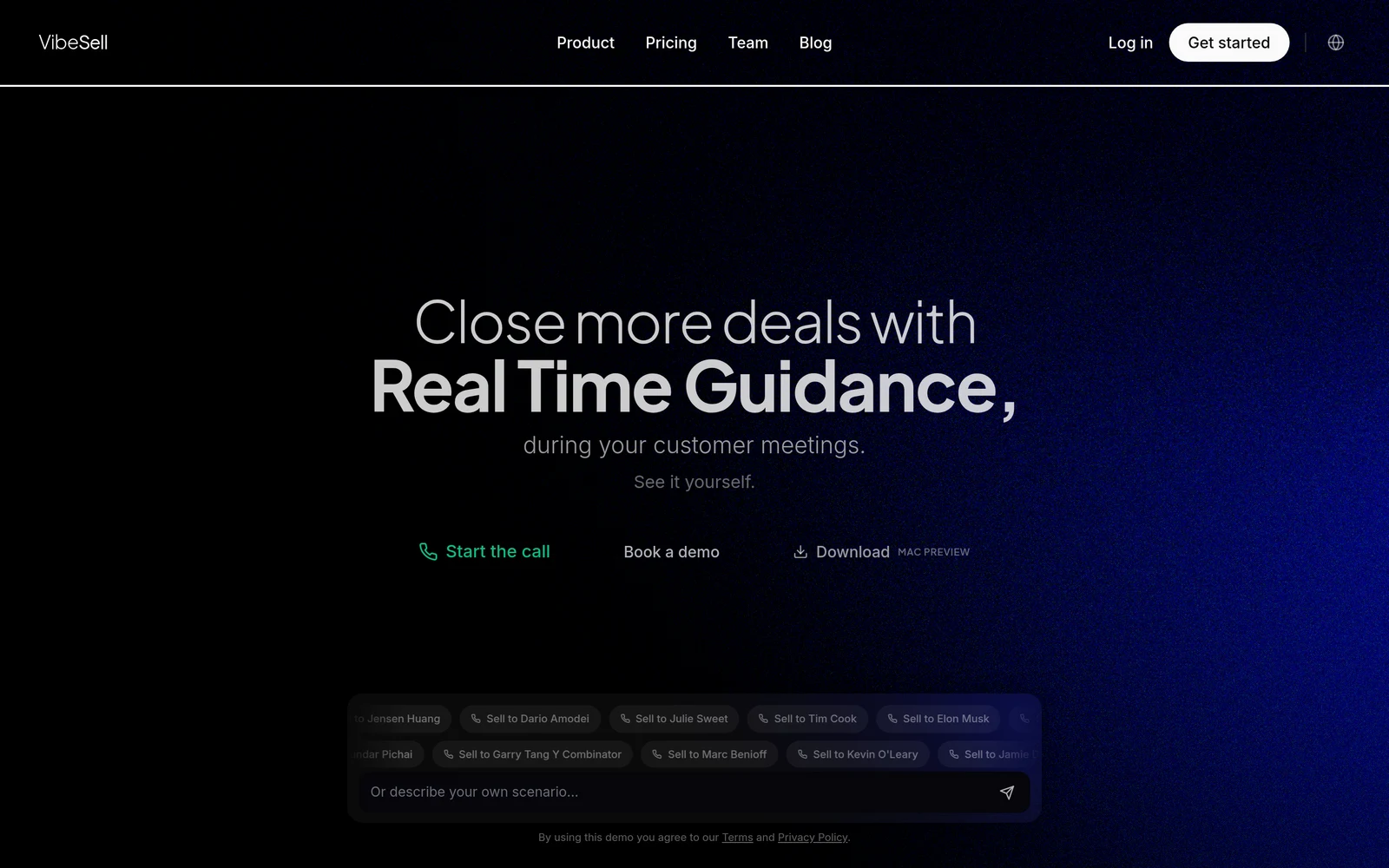
VibeSell reads the calendar, identifies the meeting attendees, and prepares a brief with company context, talking points, discovery questions, and notes from earlier meetings. During the call, it gives sparse prompts for objections, competitor questions, next actions, and sales-stage changes. The aim is instant context without forcing the rep to stare at another screen.
After the meeting, VibeSell drafts the summary and follow-up email. It also proposes CRM changes for HubSpot and Salesforce. The rep approves each change before it reaches the CRM, and an applied change can be undone. That approval step matters when data quality and buyer trust matter more than raw automation.
Its guidance can follow MEDDIC, SPIN, BANT, Challenger, Sandler, or a custom method. Practice calls use AI buyer personas built from deal context, while replays model a buyer from a past transcript. Over time, the team can review guidance suggestions and approve improvements based on its own meetings.
The Chrome extension covers Google Meet, Microsoft Teams, and Cisco Webex. A desktop client extends coverage for scheduled meetings. VibeSell also supports transcription in 99 languages and EU data residency.
Pricing model: Pro is $100 per user per month, with a 7-day free trial.
Pros: Meeting briefs, live guidance, post-call drafts, methodology support, and approval-gated CRM updates sit in one workflow.
Cons: It is meeting-centric. It is not a dialer, prospect database, or autonomous outbound system. Team plans are still in development.
For a team that wants less admin and better continuity between buyer meetings, start with a live trial. Keep the rep in charge, then measure saved prep time and CRM completion.
2. Salesforce Sales Cloud: CRM-centered enablement
Salesforce Sales Cloud is a CRM-led option for teams that want enablement activity tied to account records, pipeline data, and reporting. It fits larger teams already committed to the Salesforce ecosystem and its connected apps.
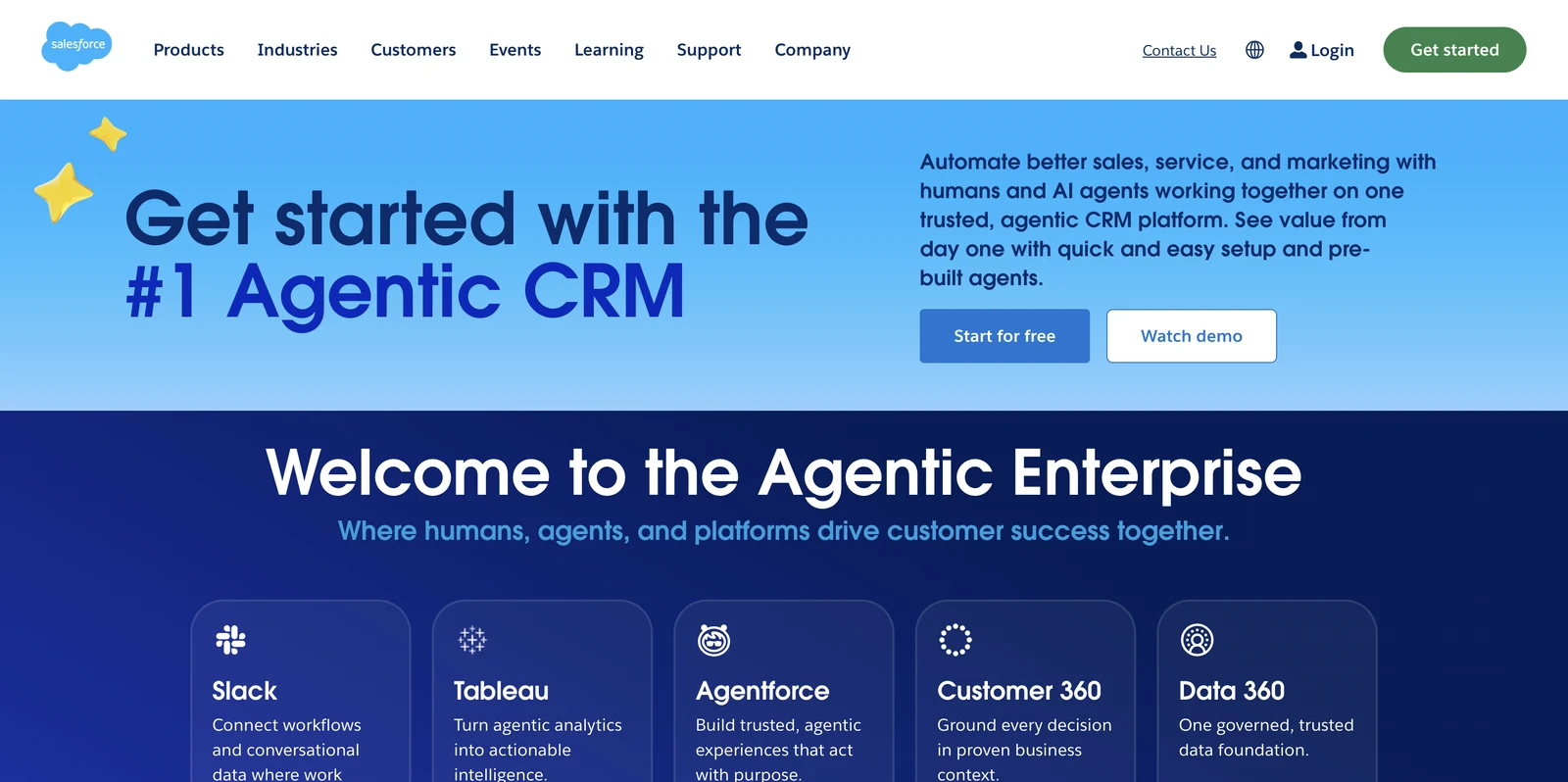
Sales Cloud centralizes lead tracking, contact management, dashboards, and reporting. Its enablement functions bring content and guidance into the CRM rather than asking reps to work in a separate portal. Salesforce also supports Agentforce autonomous AI agents inside the CRM.
The main advantage is the data spine. Managers can connect training or content activity with opportunity progress instead of reviewing usage in isolation. That helps RevOps ask a useful question: did the new play affect stage conversion, or did reps only open it once?
The trade-off is scope. Salesforce can become a large implementation when teams need custom objects, permissions, workflows, and several connected apps. Reps may also need training before the system feels simple.
Pricing model: $25 to $550 per user per month, depending on the edition.
Pros: Strong CRM alignment, broad customization, reporting, and access to the Salesforce ecosystem.
Cons: Cost and admin work can rise with complexity. Meeting preparation and live call support may need separate tools.
Choose this route when CRM governance is the main problem. If your first pain is five-minute meeting prep, test that workflow before buying a wide CRM package.
3. Highspot: content management and guided selling
Highspot is a sales enablement platform built around content, guided selling, training, coaching, and measurement. It suits enterprise teams that need one approved place for decks, battlecards, playbooks, and buyer-facing assets.
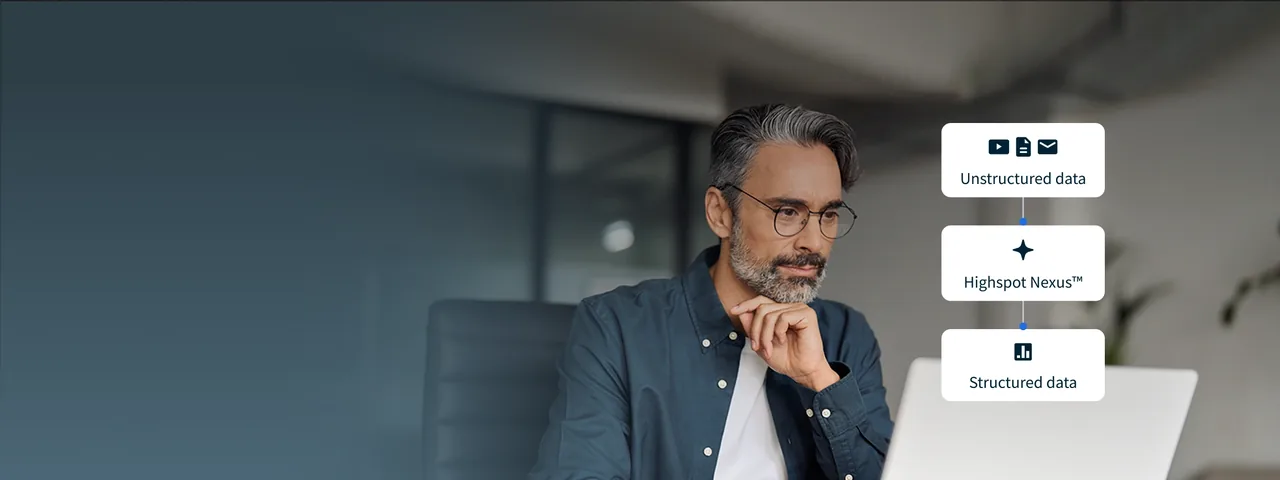
Highspot connects with Salesforce, Microsoft, and Slack. Its agents can surface next steps, recommend content, and show AI role-play. The content angle is useful when reps keep sending old decks or asking marketing for the same file.
Highspot can also track whether a buyer opened shared content. That gives marketing and enablement a path to judge asset use, not only asset production. A manager can see that a play exists, whether reps find it, and whether the team uses it at the right deal stage.
Its weakness is that it may be more platform than a mid-size team needs. A content portal still depends on clean ownership. If marketing publishes assets without clear tags, expiry dates, and use cases, a larger library can make search harder.
Pricing model: Quote-based and positioned for enterprise buyers.
Pros: Strong content control, guided selling, role-play, buyer engagement tracking, and enterprise integrations.
Cons: Quote-based buying and a broad feature set may mean a longer rollout. It is less focused on calendar-triggered meeting preparation than VibeSell.
Highspot makes sense when content sprawl is the main blocker. Set a small launch library first. Do not move every old file into the system on day one.
4. Gong: conversation intelligence and coaching
Gong is a conversation intelligence tool for teams that want recorded calls turned into coaching and deal insight. It fits sales organizations with enough call volume for managers to need help finding risks and coachable moments.
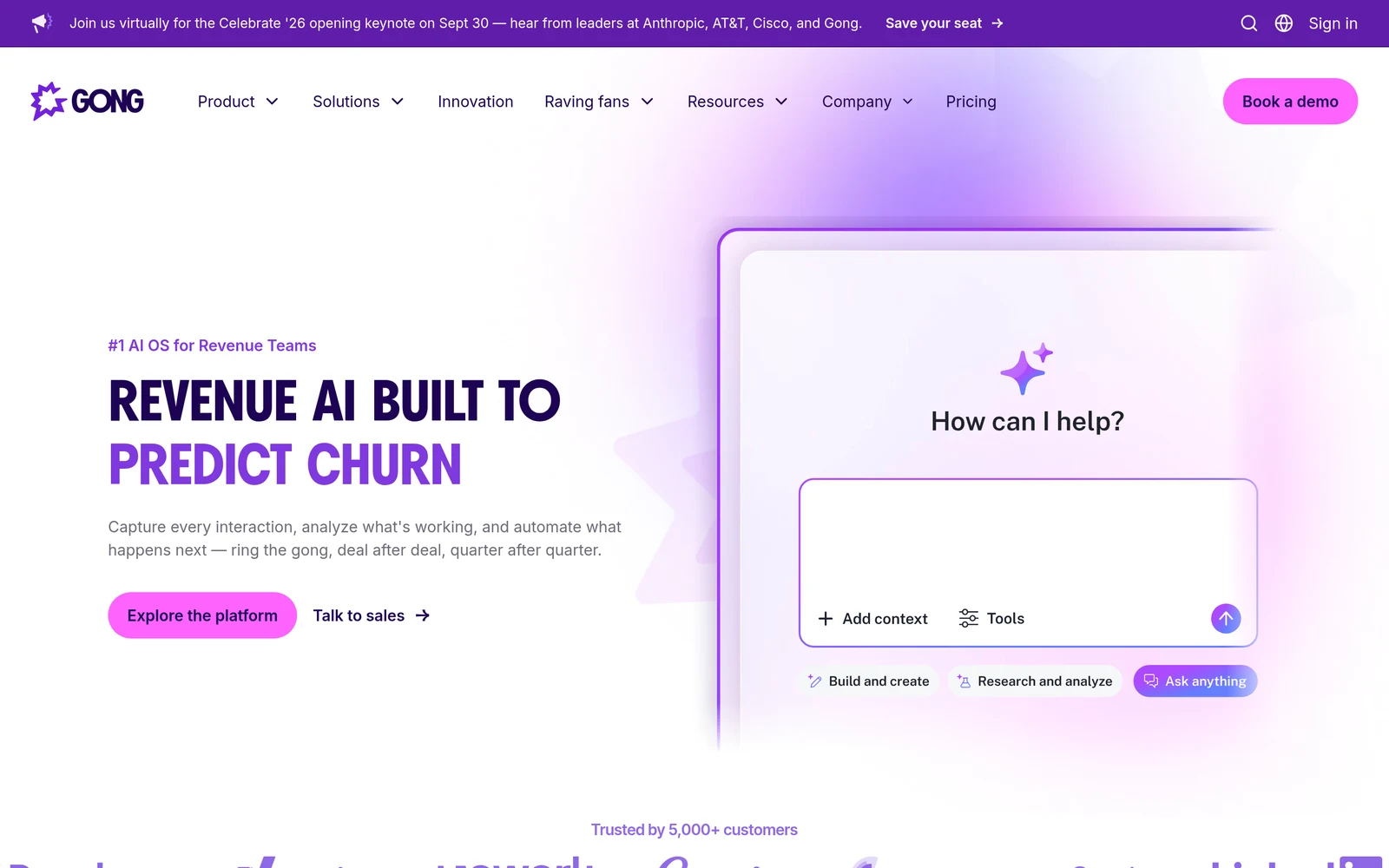
Gong records and transcribes calls across channels, then helps managers review patterns. It also lists coaching insights based on methodology adherence. That can help a manager look for missed discovery questions or weak handling of pricing objections.
The key distinction is timing. Gong is mainly useful after the call, when the conversation can be reviewed and used to coach the next one. It may not give a rep the same live support as a meeting-first assistant.
Conversation intelligence also creates a data responsibility. Tell buyers when calls are recorded, set access rules, and check local privacy needs before rollout. A transcript is useful only when the team trusts how it is stored and used.
Pricing model: Quote-based.
Pros: Automatic recording, transcription, conversation review, deal-risk signals, and coaching tied to methodology.
Cons: It is retrospective by design. Teams seeking pre-call briefs or live prompts may need another layer.
Pick Gong when manager capacity is the bottleneck. If leaders can review calls but reps still enter them cold, pair the coaching motion with better preparation.
5. Seismic: enterprise content and revenue enablement
Seismic is an enterprise revenue enablement platform for content, skills, guidance, and analytics. It is aimed at larger organizations with formal marketing, sales, and RevOps teams.
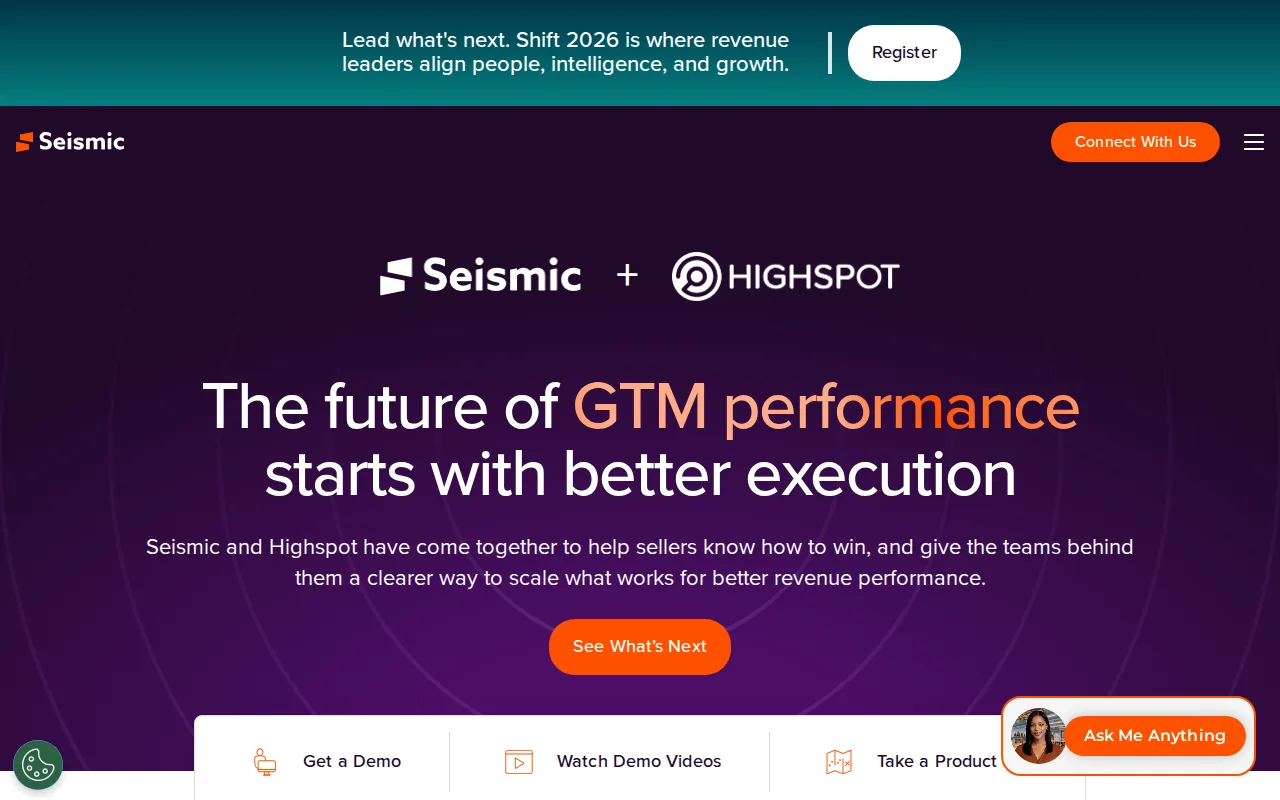
Seismic lists integrations with Salesforce, Microsoft Dynamics, and marketing platforms. Its Aura AI layer provides content recommendations and analytics. That combination helps teams connect approved messaging with the opportunity record and buyer stage.
The main use case is control at scale. A global team may need regional content rules, approval flows, and a way to keep sellers aligned after a product launch. Enablement leaders can also examine which assets get used and where buyers engage.
Seismic is less appealing when the immediate need is a lightweight meeting assistant. Enterprise governance can add work before reps feel value. Buyers should ask who owns taxonomy, content expiry, permissions, and success reporting.
Pricing model: Quote-based.
Pros: Enterprise content governance, AI recommendations, analytics, CRM connections, and support for larger revenue programs.
Cons: It may require a dedicated enablement owner.
Use Seismic when sales and marketing need a shared content system. Start with one product line and one buyer segment so the first release has a clear purpose.
6. Mindtickle: readiness, learning, and coaching
Mindtickle is a revenue enablement platform for onboarding, learning, practice, content, coaching, and deal execution. It fits enterprise teams that want readiness programs tied to field behavior.
Its platform includes AI sales simulation, personalized learning, content recommendations, manager coaching, and follow-up automation. ElevateOS uses agentic AI to coach and guide reps based on interactions.
Mindtickle is a good match for teams with long ramp periods or frequent product changes. A new rep can follow a learning path, practice a pitch, receive feedback, then apply that learning in a customer conversation. Managers can use skill and performance data to focus coaching where it is needed.
The caveat is adoption outside training events. A readiness platform works when managers reinforce it in deal reviews and one-to-ones. If learning sits apart from the CRM and live selling process, completion may look healthy while behavior stays the same.
Pricing model: Quote-based.
Pros: Learning paths, AI role-play, coaching, content, deal execution, and enterprise integrations.
Cons: It can be more than a small team needs. Buyers should test how quickly practice and coaching reach the daily workflow.
Mindtickle belongs on the shortlist when onboarding and readiness are measured business needs, not side projects.
Key Takeaway: Pick the tool that fixes your main bottleneck first. A call coach cannot repair poor CRM data, and a content portal cannot prepare a rep for an unknown buyer five minutes before a meeting.
7. Salesloft: sales engagement and outreach workflows
Salesloft is a sales engagement platform for outreach workflows, automation, forecasting, productivity, and coaching. It suits teams that need to manage repeatable prospect touchpoints across a large pipeline.
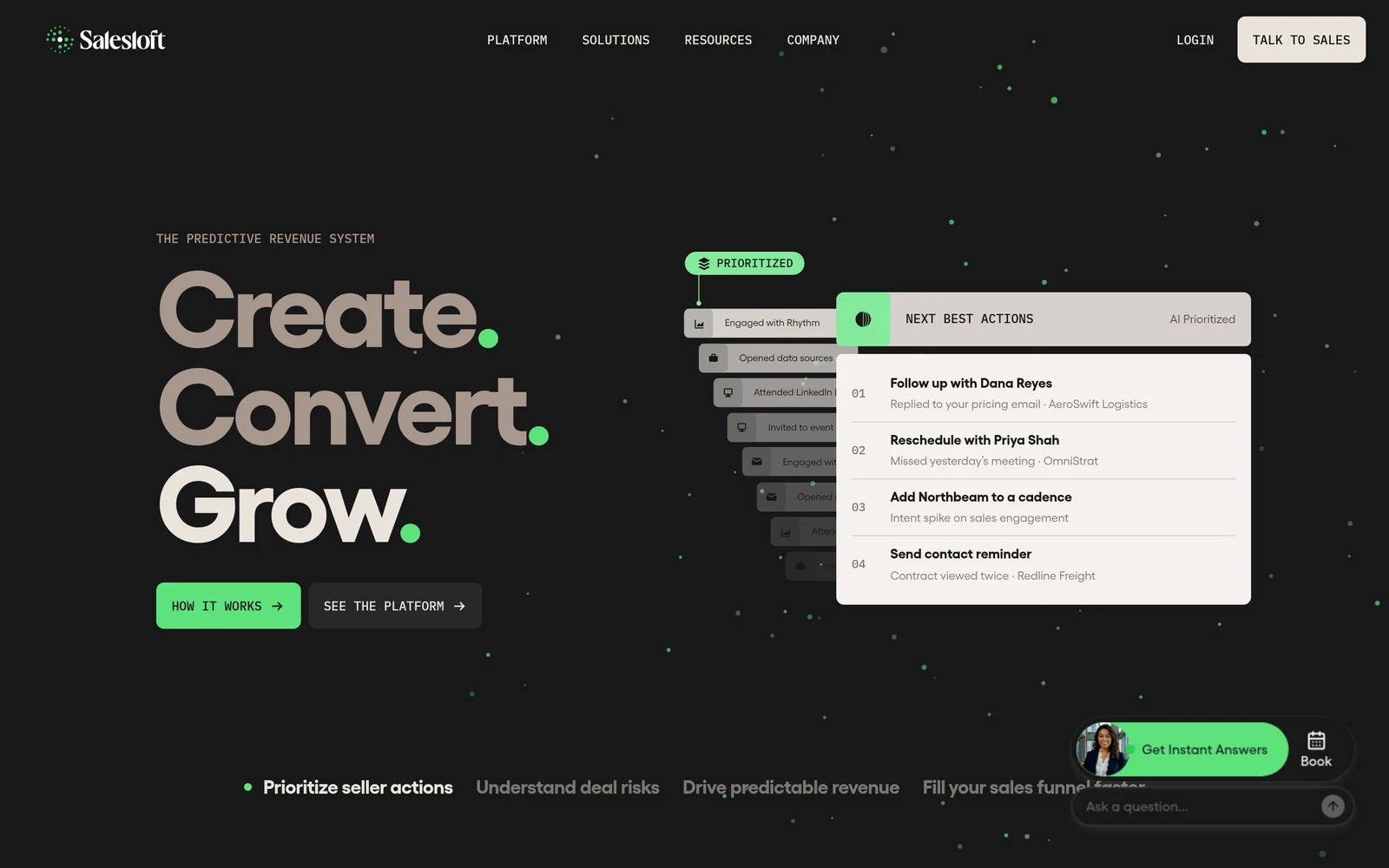
Salesloft includes AI agents for autonomous prospecting and outreach, along with CRM integration with automatic activity logging. Those functions can reduce manual work when reps run many planned sequences and managers need activity tied to pipeline.
Salesloft can also help teams avoid a stack made of separate tools for sequences, call recording, forecasting, and coaching. Consolidation can reduce tab switching, but it does not remove the need for clean data and clear rules about when automation should act.
This is an outreach-first choice, not a meeting-prep-first choice. It may be a better fit for outbound process control than for research on every meeting attendee or live guidance during a buyer call.
Pricing model: Quote-based for Advanced and Elite editions.
Pros: Sales engagement workflows, outreach automation, forecasting, activity logging, and coaching support.
Cons: Teams focused on complex discovery may need separate meeting intelligence. Autonomous outreach also needs careful review for tone, consent, and brand risk.
Choose Salesloft when sequence execution is the clear gap. Measure reply quality and pipeline progression, not just the number of touches sent.
8. Allego: practice, coaching, and conversation intelligence
Allego brings learning, coaching, content, digital selling, and conversation intelligence into one revenue enablement platform. It fits enterprise teams with complex products, long sales cycles, or strict messaging needs.
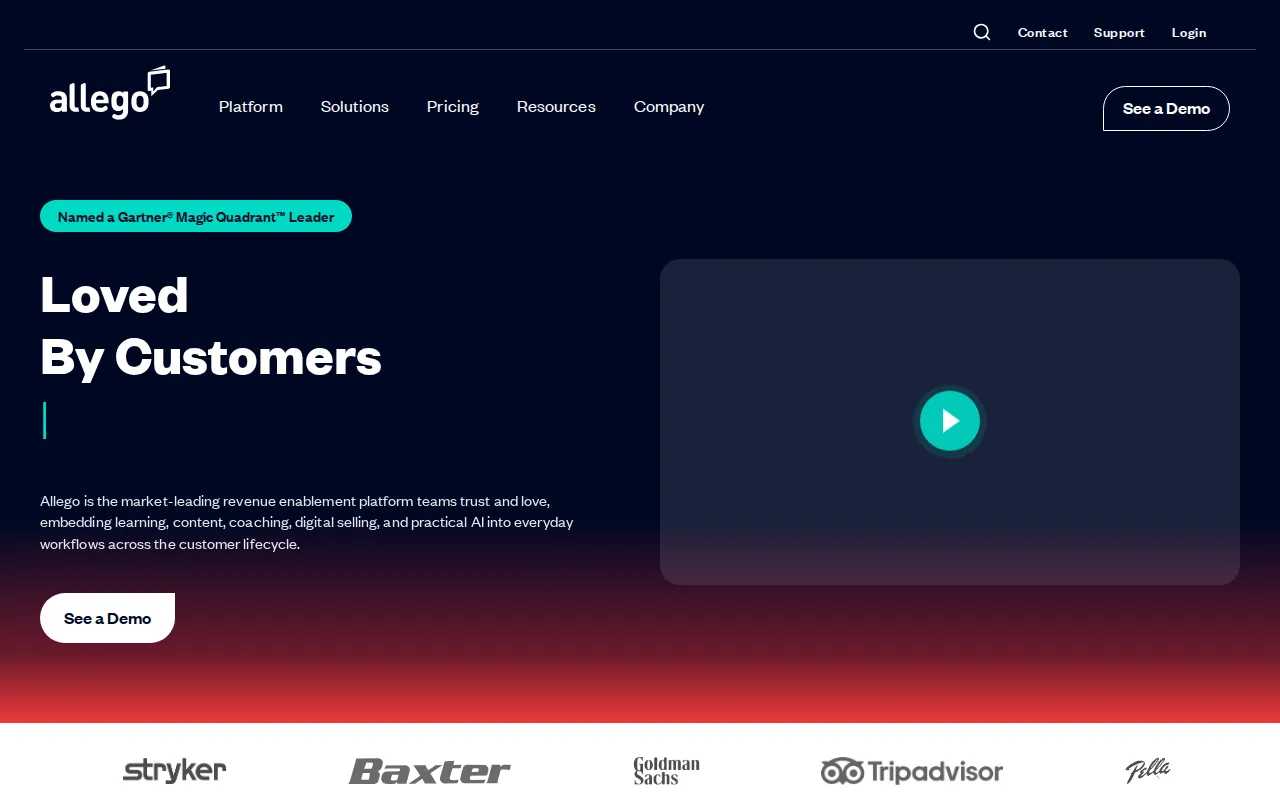
Allego describes real-time guidance, risk signals, next-step suggestions, mobile-first learning, practice scenarios, and personalized buyer spaces. Its conversation intelligence includes automatic recording, multi-language transcription, and deal-risk signals.
This breadth makes Allego useful when enablement cannot stop at onboarding. Reps can practice, use approved content, receive coaching, and review buyer engagement.
That breadth creates a clear buying question: which parts will the team use every week? A large platform can replace several point tools, but only if ownership is clear and managers reinforce the workflow.
Pricing model: Quote-based and positioned for enterprise buyers.
Pros: Practice, coaching, content, conversation intelligence, buyer spaces, and live guidance.
Cons: Enterprise scope may create a longer buying process. It is less transparent on price than a product with a public per-user rate.
Allego is worth considering when readiness, content, and call insight need one operating model.
9. Spekit: embedded guidance at the point of work
Spekit is an AI-native revenue enablement platform that puts governed knowledge, coaching, deal context, and buyer content inside the tools reps already use. It fits high-growth B2B teams with fast product and process change.
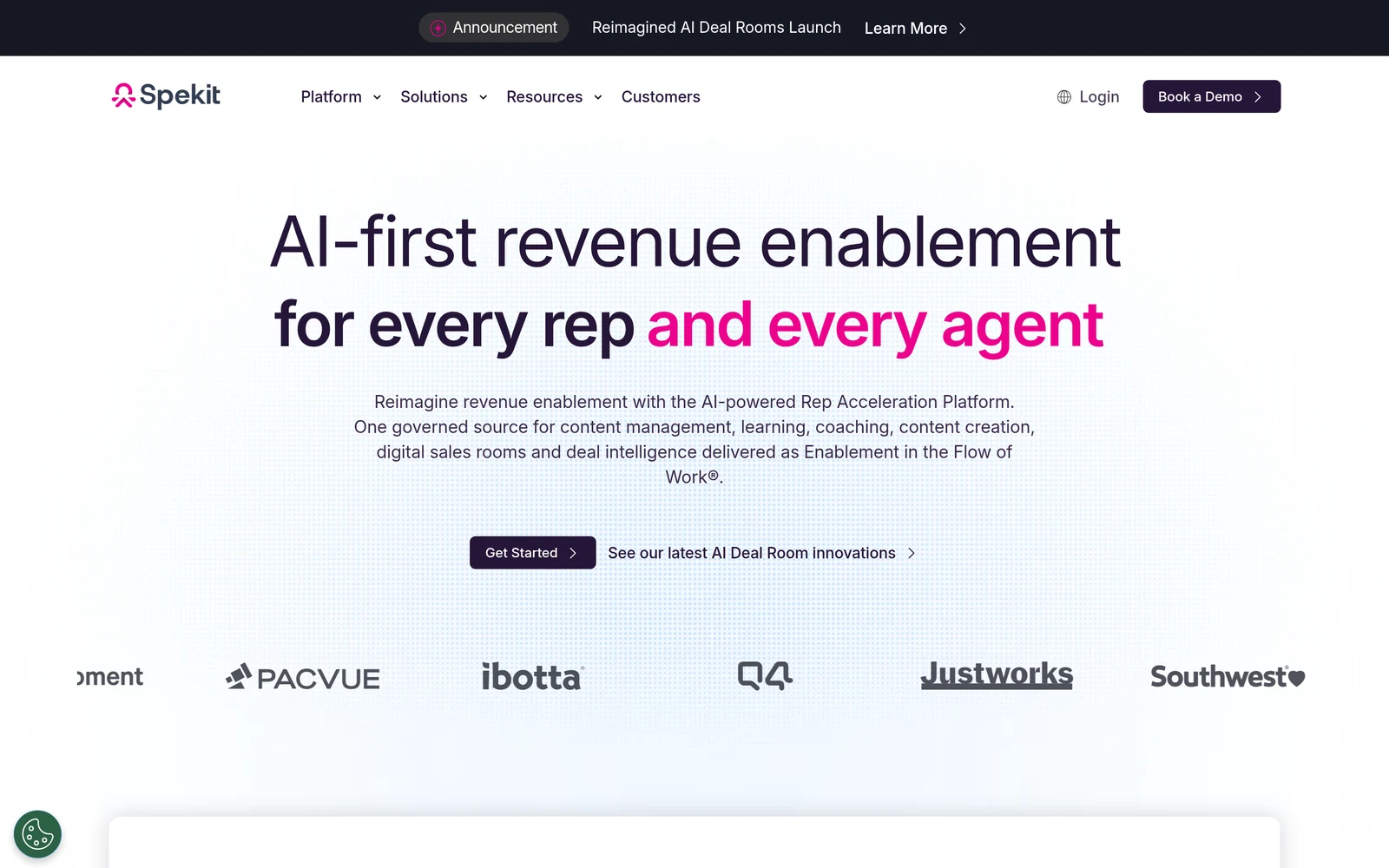
Spekit connects Salesforce, Gong, email, Slack, HubSpot, and SharePoint, with its deepest integration in Salesforce. Its Chrome extension brings guidance into other web tools. AI Sidekick can use deal context to surface a play, draft an email, or build a deal room.
The point is execution rather than a separate content portal. A rep sees current product guidance beside the opportunity, then uses that context in the next action. Knowledge freshness and governance are important here because stale guidance can spread at the same speed as good guidance.
Pros: In-workflow guidance, governed knowledge, deal context, AI content support, buyer experiences, and broad connections.
Cons: It is not positioned as a traditional LMS. Teams may need to test whether its learning paths cover formal certification requirements.
Spekit is a strong category fit when reps ignore portals because the answer needs to appear inside the CRM or browser.
10. HubSpot Sales Hub: accessible CRM and sales workflows
HubSpot Sales Hub is a CRM-centered option for teams that want sales workflows, content support, email tools, and simple reporting in one system. It fits small and mid-size B2B teams that value a lower barrier to entry.
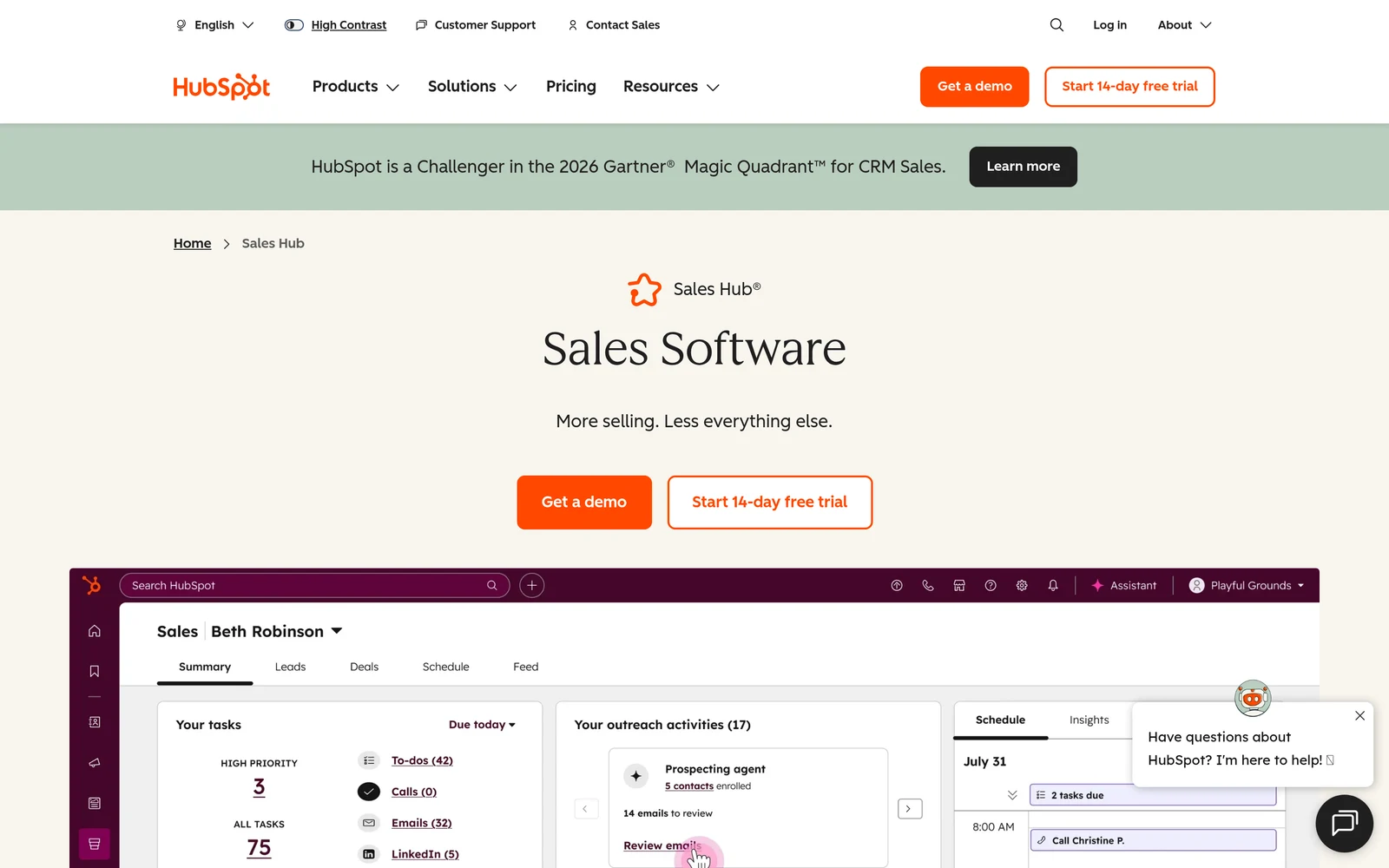
HubSpot supports lead management, prospect email, performance dashboards, and sales content workflows. Pricing ranges from free to $150 per user per month.
The main benefit is accessibility. A team can start with core CRM work, then add workflows as its process becomes clearer. That can be easier than introducing a large enterprise enablement suite before the team agrees on stages, ownership, and required fields.
The trade-off is depth. Teams that need advanced readiness programs, detailed content governance, or live meeting guidance may add other tools. HubSpot can hold the workflow, but it does not remove the need for a sound enablement plan.
Pricing model: Free to $150 per user per month.
Pros: Accessible CRM, email workflows, dashboards, content support, and a familiar starting point.
Cons: Advanced enablement needs may require extra products or integrations. The free entry point should not be confused with a full enablement program.
HubSpot Sales Hub works well when the team first needs clean pipeline habits. Build those habits before adding complex automation.
Compare the 10 Sales Enablement Tools
The right sales enablement software depends on where the team loses time. A CRM-led system helps with records and reporting. A content platform helps with approved assets. A readiness platform helps with practice and ramp. A meeting companion helps when the gap appears five minutes before a call.
| Tool | Best fit | Main strength | Pricing model | Main watch-out |
|---|---|---|---|---|
| VibeSell | B2B teams with 10 to a few hundred reps | Briefs, live guidance, follow-up drafts, CRM approval | $100 per user per month | Meeting-focused, no dialer or prospect database |
| Salesforce Sales Cloud | Salesforce-led enterprises | CRM data and reporting | $25 to $550 per user per month | Implementation complexity |
| Highspot | Enterprise enablement teams | Content and guided selling | Quote-based | Needs content governance |
| Gong | Teams needing call review | Conversation intelligence | Quote-based | Mostly post-call analysis |
| Seismic | Large revenue organizations | Content governance and analytics | Quote-based | May need dedicated ownership |
| Mindtickle | Enterprise readiness programs | Learning and AI practice | Quote-based | Broad rollout scope |
| Salesloft | Outbound and engagement teams | Sequences and workflow automation | Quote-based | Not meeting-prep-first |
| Allego | Complex enterprise sales | Learning, content, coaching, and calls | Quote-based | Large platform footprint |
| Spekit | Fast-changing B2B teams | In-workflow guidance | Not supplied | Test formal learning needs |
| HubSpot Sales Hub | Small and mid-size teams | Accessible CRM workflows | Free to $150 per user per month | May need added tools |
Only 9 of 19 tools mention real-time guidance. Six mention pre-meeting briefs, while seven mention post-meeting automation. That gap explains why teams often stitch together a CRM, content library, call recorder, and note tool.
VibeSell covers the full meeting path with calendar-driven research, sparse live prompts, and approval-gated CRM suggestions. The product's price is public, which makes a pilot easier to budget than a quote-only platform. Buyers should still test the workflow with real meetings, real accounts, and real CRM records.
Pro Tip: Run a two-week pilot with a small rep group. Track prep time, post-call admin time, CRM completion, meeting follow-up speed, and rep adoption before you sign a wider contract.
For a deeper look at live guidance, meeting prep, coaching, and CRM workflows, compare sales enablement software for B2B teams by the job it must complete.
FAQ
Conclusion
Choose the tool that fixes the bottleneck your reps feel every day. For B2B teams that need meeting briefs, sparse live support, follow-up drafts, and approval-gated CRM work, VibeSell is the clearest place to start. Run the 7-day free trial with real meetings, then compare prep time and admin time against your current process.


