
Prospect Research Tools for B2B Sales


TL;DR
Compare prospect research tools for B2B sales teams, including data platforms, enrichment tools, outreach software, and VibeSell for meeting prep.
Prospect research can eat a full morning before a rep sends one useful message. The market is also split into narrow tools, data platforms, enrichment systems, and outreach software. Here are ten named options, with the job each one fits, the trade-off to expect, and where VibeSell fits when the work continues into the customer meeting.
1. VibeSell, for meeting-ready prospect research
VibeSell is a real-time AI sales companion for teams that need account context before and during a meeting. It prepares a pre-call brief with company details, attendee context, talking points, discovery questions, and notes from earlier meetings.
The research starts before anyone asks for it. VibeSell reads your calendar, works out who is actually attending each meeting, and sends its AI agents to research those people and the companies they work for ahead of the call. Nobody builds a list or triggers a lookup. The brief is already there when the meeting is.
That is the part most prospect research tools leave to the rep. A database can tell you about a company once you think to search for it. VibeSell decides what to research based on what is in your diary next week, which means the prep happens for every meeting rather than only the ones someone remembered to prepare for.

That makes VibeSell different from a contact database. It isn't a prospect or contact database, and it doesn't send autonomous outbound messages. Its job starts when a real conversation is coming up. During the call, it can surface objection guidance, competitor context, next actions, and sales-stage prompts. The prompts are meant to stay sparse, so the rep can keep attention on the buyer.
| Research need | What VibeSell does | Useful team outcome |
|---|---|---|
| Deciding who to research | Reads the calendar and identifies who is attending each meeting | Nothing depends on a rep remembering to prepare |
| Before the call | Sends AI agents to research those people and their companies, then builds a brief | The rep enters with a clear plan |
| During the call | Shows live guidance and detects sales stage | The rep can respond while the issue is still active |
| After the call | Drafts the summary, follow-up, and CRM updates | The rep reviews changes instead of retyping notes |
| Recurring meetings | Carries context from earlier conversations | Commitments don't disappear between calls |
VibeSell works through a Chrome extension with Google Meet, Microsoft Teams, and Cisco Webex. It supports transcription in 99 languages and EU data residency. The main caveat is scope. Teams still need another system for prospect discovery, contact data, outbound sequencing, or dialing.
For sales leaders, the useful test is simple: can a rep open the brief five minutes before a meeting and know what changed since the last one? VibeSell's real-time sales intelligence is built around that workflow.
2. Amplemarket, for contact-level buying signals
Amplemarket fits mid-market and enterprise teams running multichannel outbound. Its strongest point is contact-level signal intelligence, which helps a rep see which person may be showing buying behavior rather than only seeing activity at the company level.
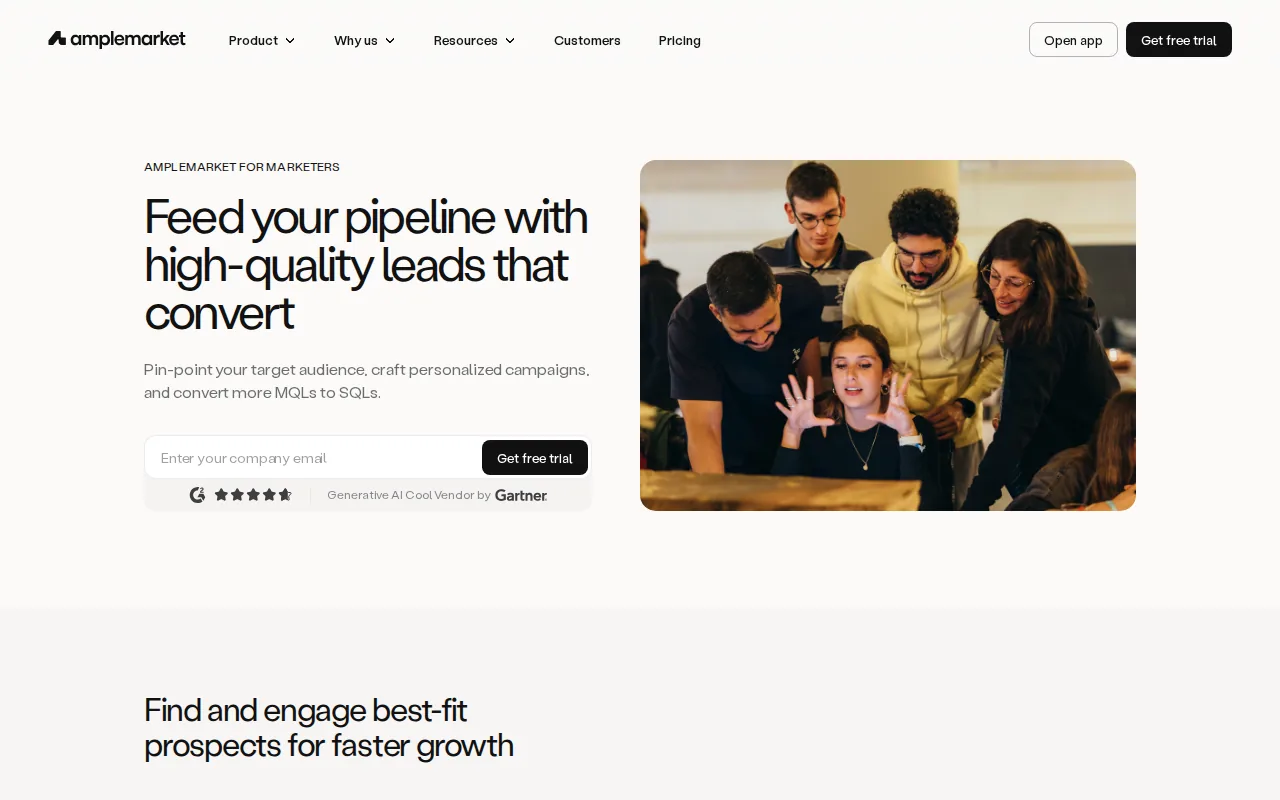
The research behind this shortlist describes a B2B contact database with more than 200 million contacts. Amplemarket's Duo Copilot uses specialized agents to find signals, research accounts, and build sequences while keeping approval with the rep. That human review matters when a message could affect a live account.
Amplemarket is a good match when one system should cover discovery, research, signals, execution, and workflow automation. It is less attractive if your team wants a narrow data tool and already has a trusted outbound stack. Buyers should also ask how records are refreshed and which signals are available in their target market. The vendor describes the product in its AI prospecting platform overview.
3. Apollo, for broad reach on a tighter budget
Apollo suits price-sensitive teams that need a large contact database and broad reach. It combines B2B contact and company data, so a small sales team can start research without stitching together many systems.
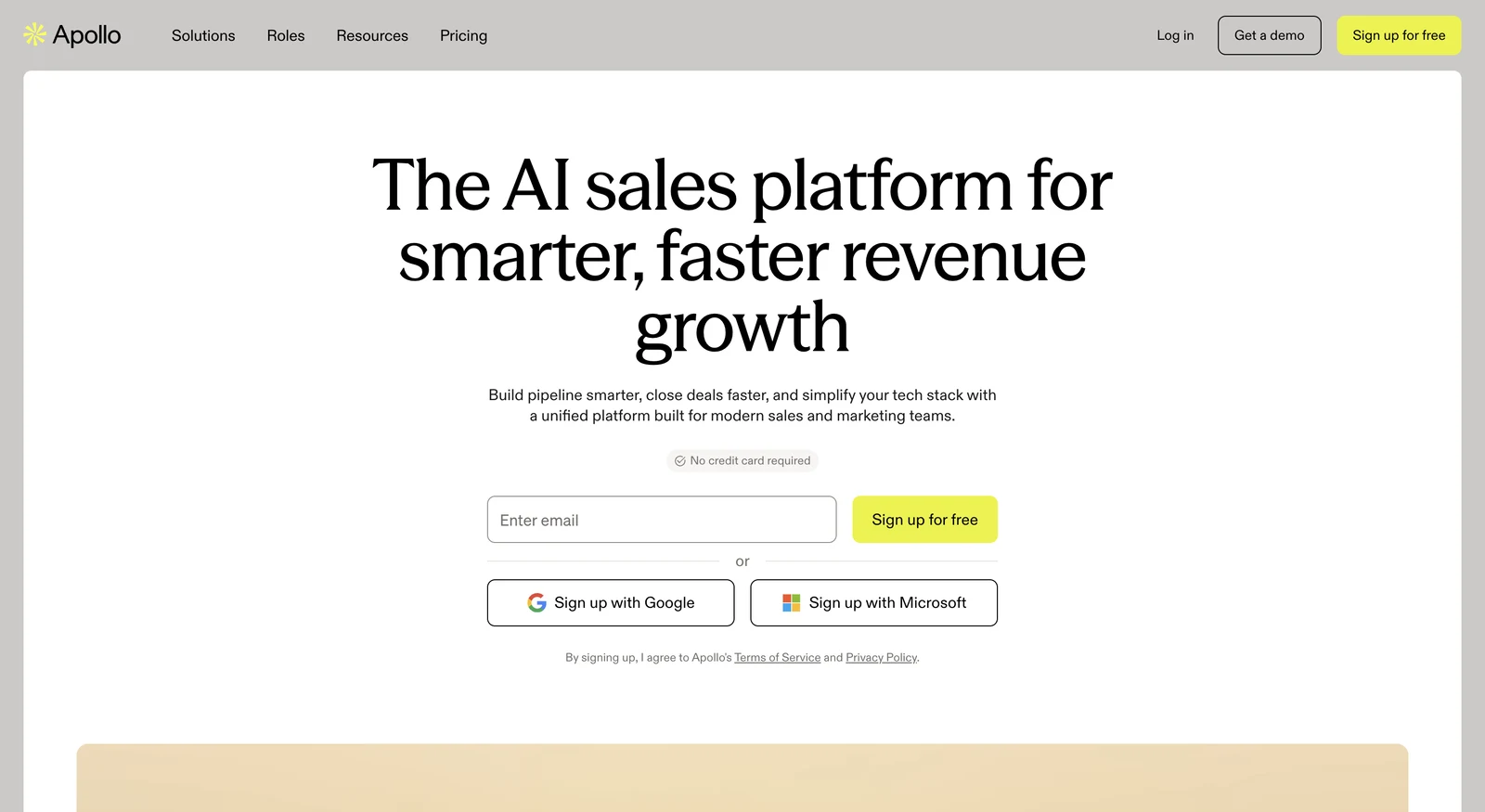
The trade-off is depth. Apollo is strong at helping teams find many possible contacts, but a large list doesn't tell a rep which account is ready for a serious conversation. Data quality can also vary by role, region, and record age. That means reps should verify key contacts before a high-value touch.
Apollo works well when the workflow starts with a target market, moves into contact search, and then feeds an outbound sequence. It is less suited to teams whose main need is a meeting brief that connects current research to past customer calls. Use it when reach is the bottleneck, not when meeting continuity is the bottleneck.
4. Clay, for custom enrichment workflows
Clay is built for GTM engineering teams that want custom data workflows. Its key strength is enrichment through more than 150 data providers, which gives technical users room to build their own research logic.
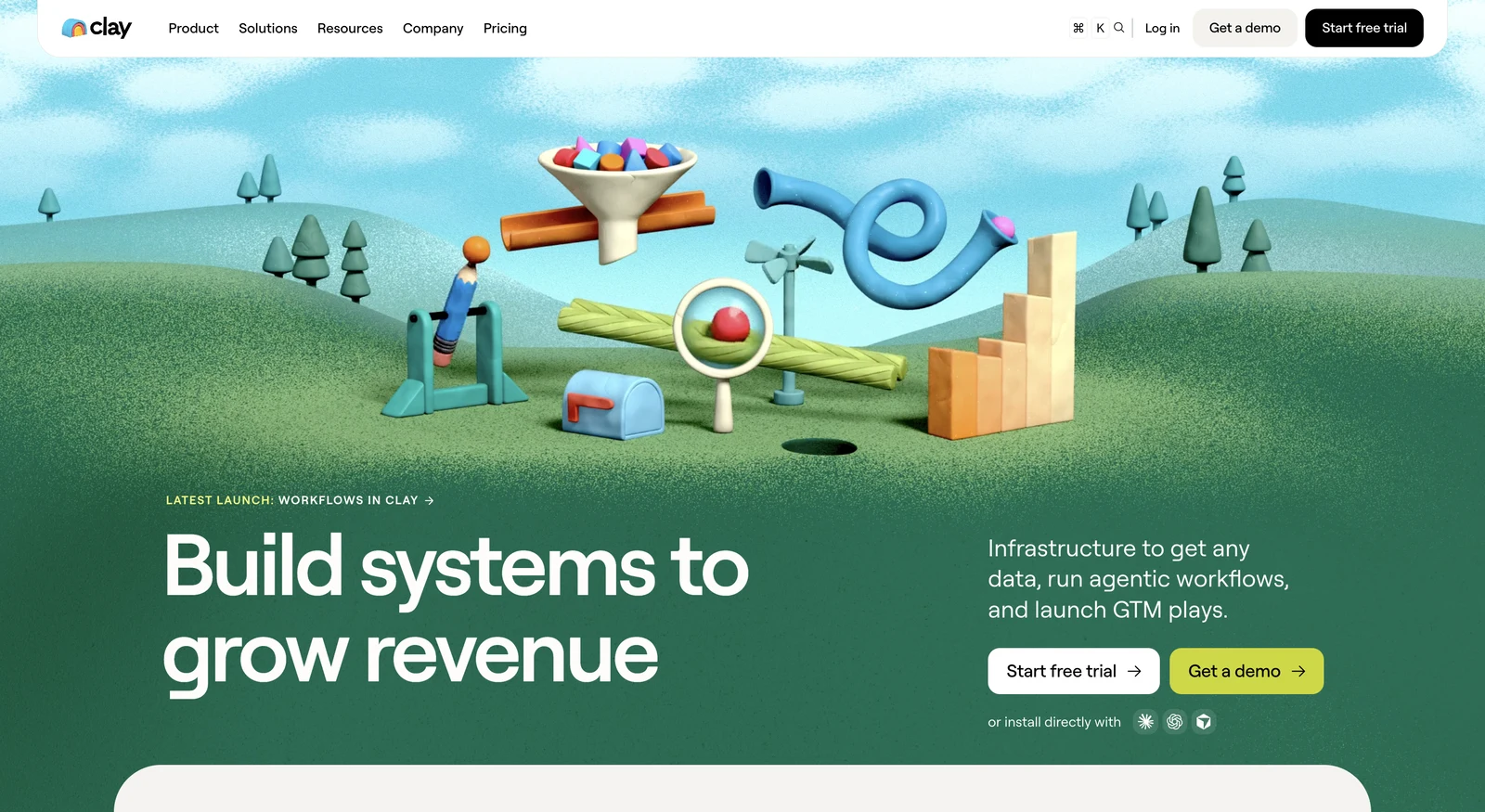
Imagine a RevOps team that starts with a list of target accounts, adds company details, checks several data sources, and sends the result into another system. Clay can fit that model because the team controls the workflow instead of accepting one fixed path. The research context also names an Attio integration.
Clay's weakness is the same thing that makes it appealing. Custom flows need someone who can design, test, and maintain them. A sales team that wants instant answers may find the setup too technical. Ask who owns failed enrichments, source conflicts, and field mapping before you put Clay at the center of your process.
5. ZoomInfo, for enterprise account intelligence
ZoomInfo fits enterprise teams that need wide account coverage, verified data, and account-level signals. Its platform connects contact records with company information, intent signals, and CRM data.
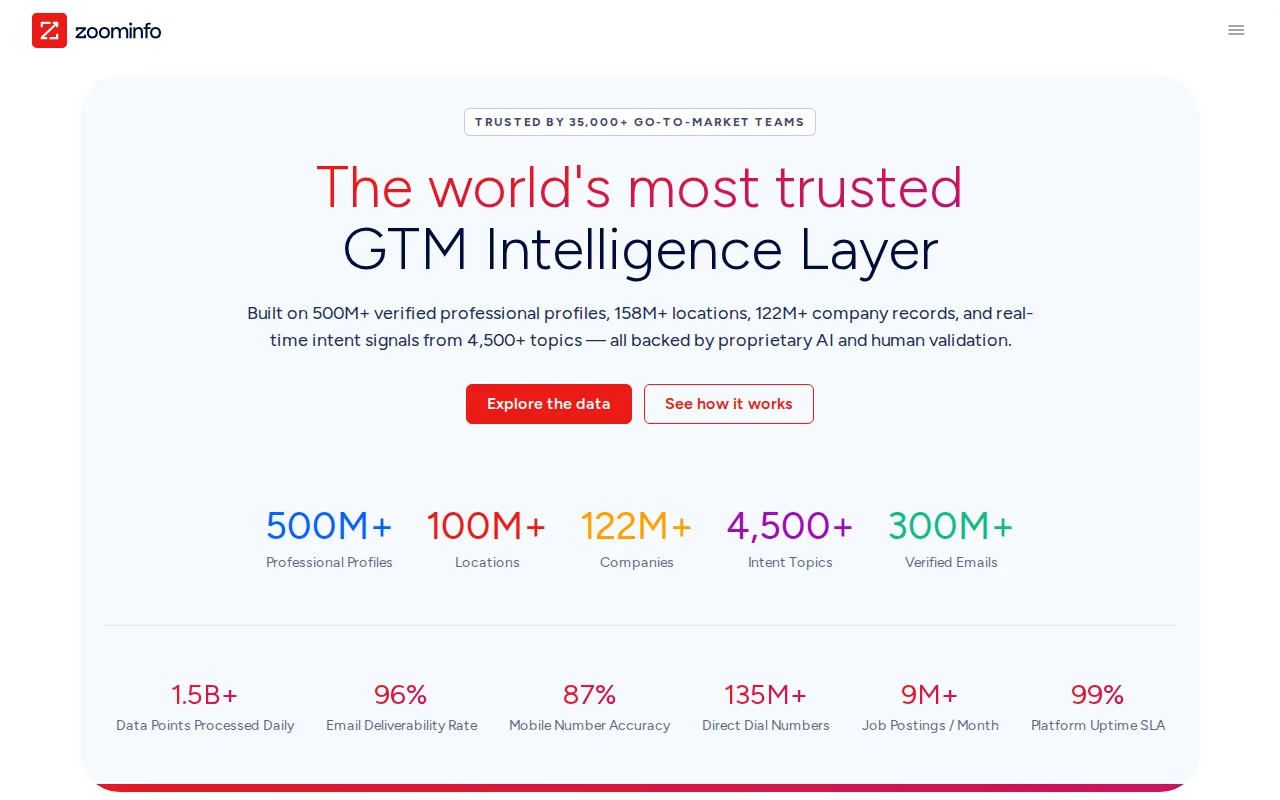
The vendor describes search across hundreds of attributes, plus org charts, direct dials, business emails, technographic data, job-change alerts, and CRM export. It also connects data points to help explain why an account may be worth attention.
That breadth comes with a buying question: how much of the data does your team truly need? Enterprise teams may value wide discovery coverage, while a smaller team may pay for fields that never affect its sales motion.
ZoomInfo can help identify the account and contact. It won't replace the rep's need to understand the last customer conversation. For that, pair account research with a meeting workflow. The vendor explains its prospect research product on its official prospect research page.
6. Cognism, for European outbound data
Cognism is aimed at European outbound teams that need phone-verified data.
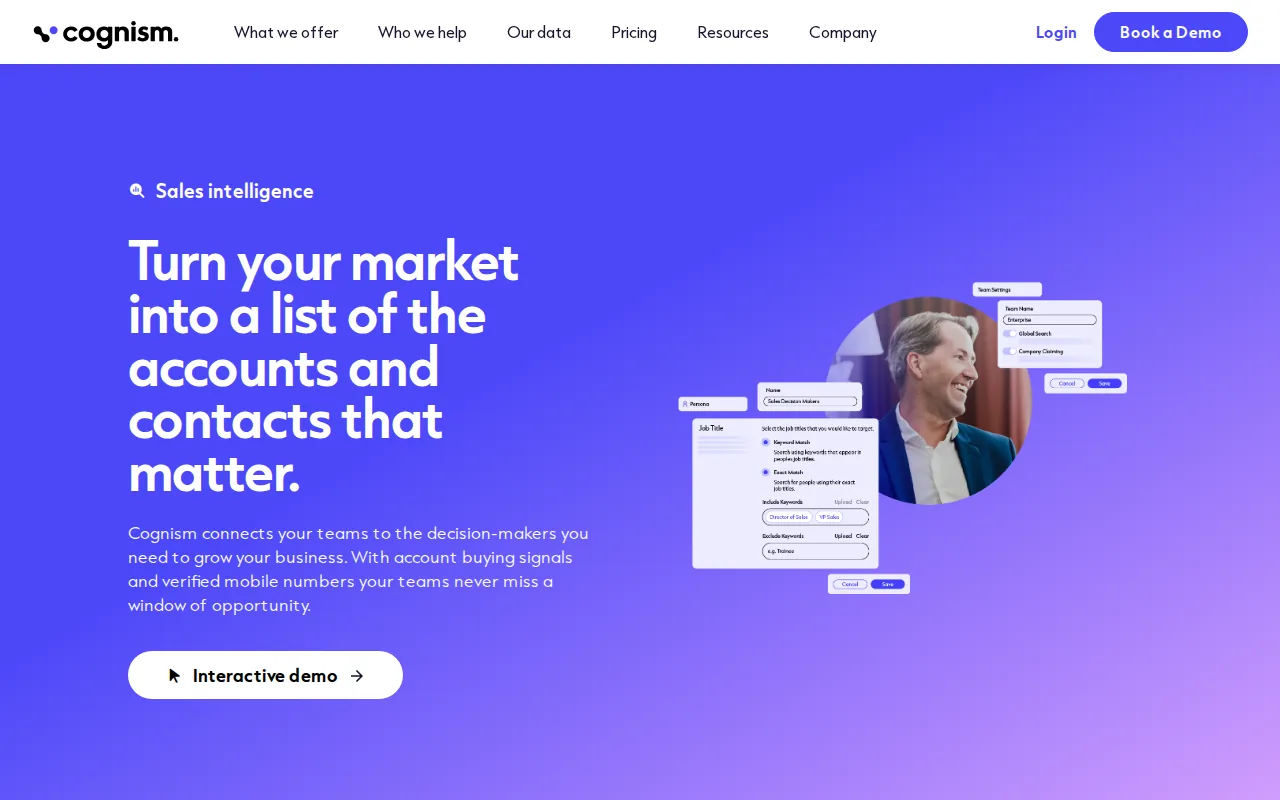
That focus matters when a team sells across several European markets and must take data rules seriously. A phone number alone is not a prospecting strategy. Reps still need the person's role, account fit, timing, and a reason for contact.
Cognism is the clearest fit in this shortlist for teams that put European phone verification at the center of outbound research. Its caveat is focus. If your main need is live meeting context or custom enrichment across many data sources, you may need another layer beside it. Ask for coverage by country before you commit.
7. Lusha, for simple contact reveals
Lusha works for SMB teams that need quick contact reveals and light sequencing. It focuses on company data and professional profiles, which can help a rep fill a gap while researching a target account.
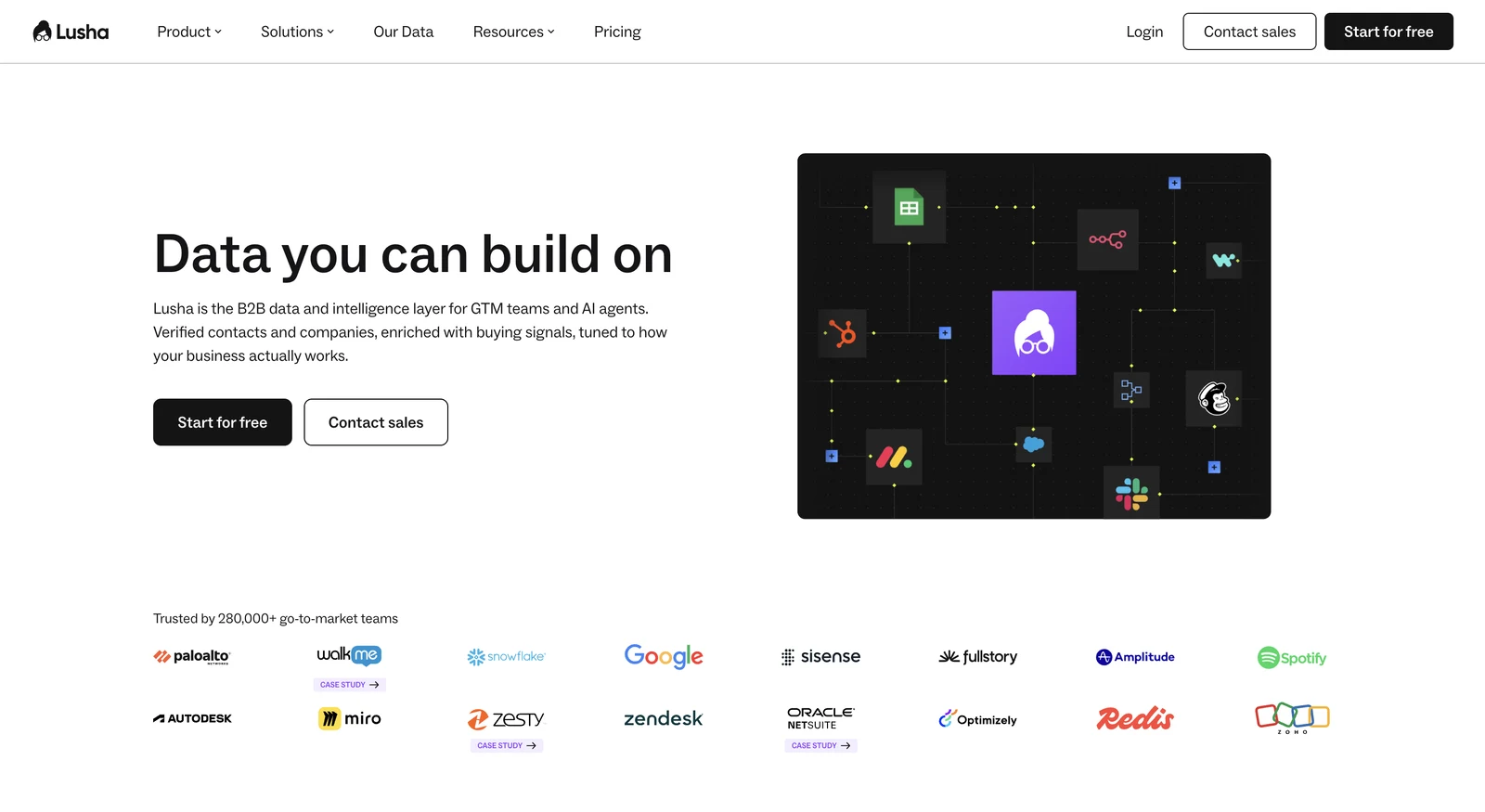
This is a narrower use case than account intelligence. A rep may find a name, role, or contact detail, then still need to check the company's site and recent activity. That can be enough for a small team with a short list and a clear target market.
Lusha's simple shape can be a benefit. There is less workflow design than with a custom enrichment tool. The limitation is that lightweight contact reveals may not give sales leaders a full view of buying signals, meeting history, or methodology adherence. Choose it when the missing field is the problem.
8. Outreach, for research-linked sales execution
Outreach fits enterprise orchestration and execution teams. Its strength is the handoff between prospect research and the sales workflow, where account work must become an approved sequence or deal action.
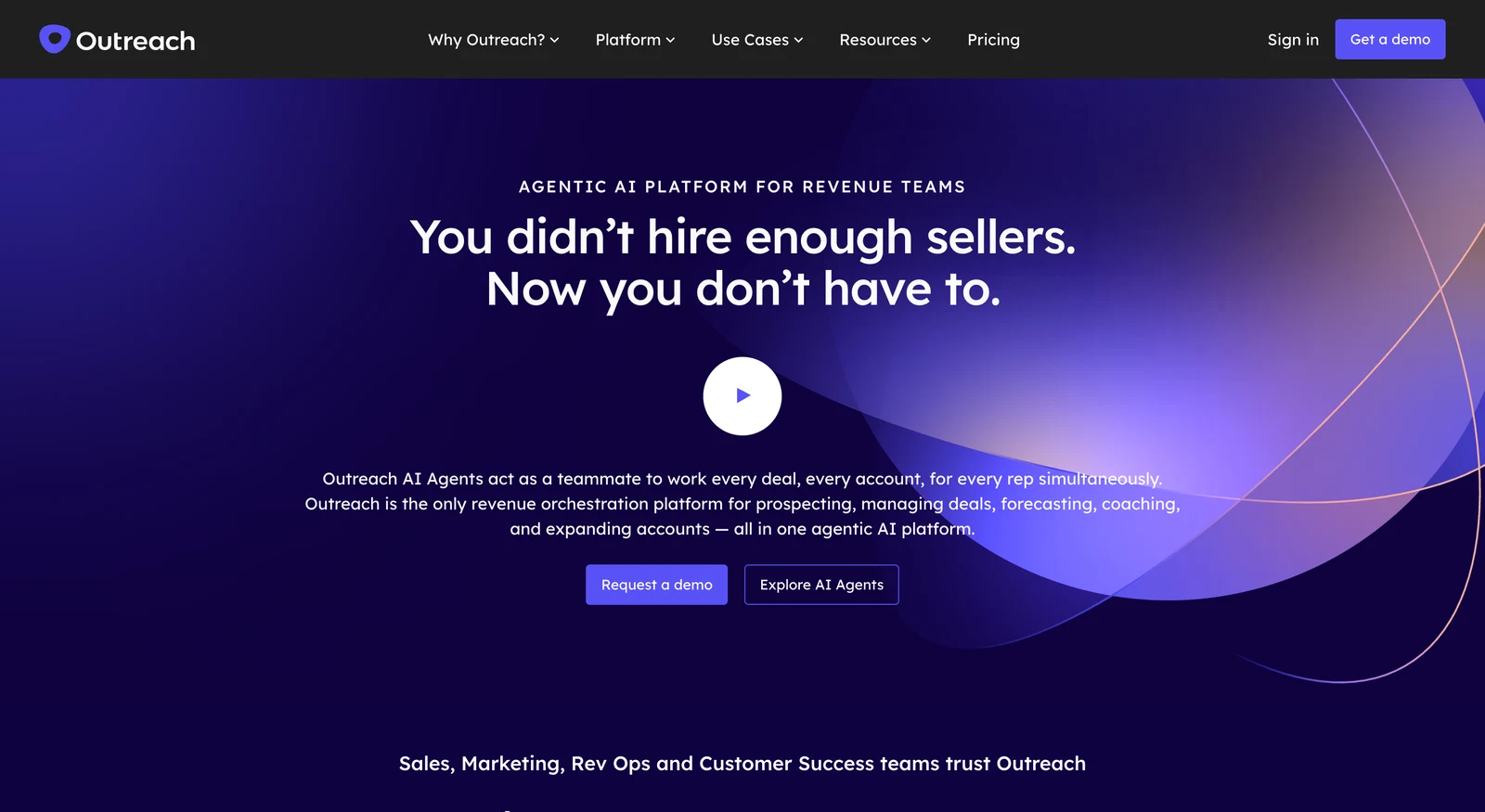
The research context names AI Agent Studio and the Omni release as automation capabilities. That points to a system built for teams with defined processes, several reps, and a need for management control over execution.
Outreach is less of a pure research database than Apollo, ZoomInfo, or Cognism. It may rely on other systems for contact discovery and enrichment. The key test is the handoff: can a rep see why the account matters before a sequence starts, or does the system only manage the next touch?
Key Takeaway: Before buying, map the exact handoff between data, research, outreach, the live meeting, and approved CRM updates.
9. Lemlist, for personalized multichannel prospecting
Lemlist suits SMB teams that want creative multichannel sequences. Its stated strength is personalization across more than one outreach path, with capabilities that include AI voice notes, WhatsApp automation, and agentic enrichment.
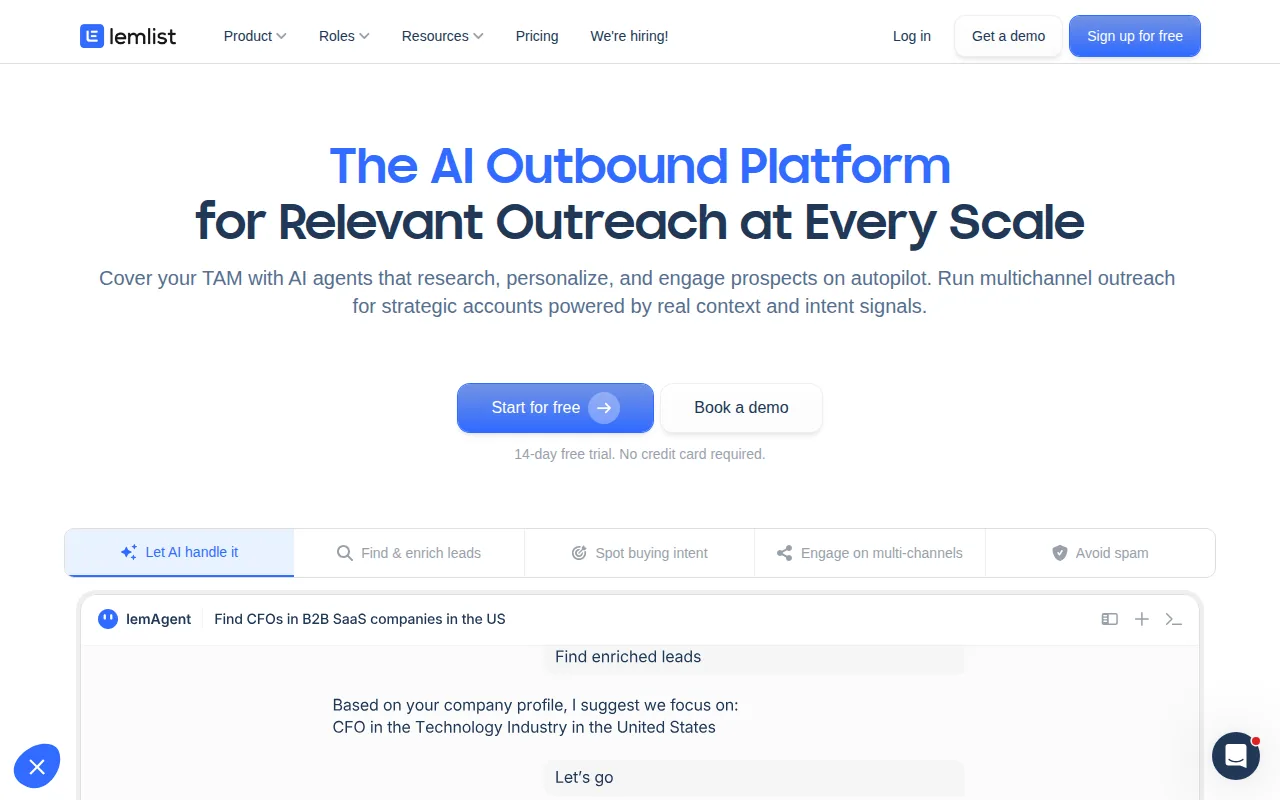
That can help when a rep has a sound reason to contact someone but needs a sequence that feels less repetitive. The risk is process drift. More channels can mean more activity without better research. Set a clear rule for when a rep uses email, when they switch channels, and when they stop.
Lemlist is a better fit for teams that already know their target buyer and message. It is not a substitute for account discovery or a pre-meeting brief. If a prospect replies, the rep still needs a clean record of what was said and what happens next.
10. Instantly, for high-volume cold email research workflows
Instantly is aimed at founders and teams focused on cold email volume with quick setup. Its research describes webhooks, HTTP automation steps, and high API limits as part of its workflow.
That makes Instantly useful when a team has already built its list and wants to move data into a high-volume email process. It is less useful when the hard work is deciding which accounts fit, which contact is right, or what changed before a meeting.
Volume also raises the cost of poor data. A wrong field can affect many messages at once. Keep a human review step for target lists, suppress contacts with unclear permission, and measure reply quality instead of counting sends.
How to choose among these tools
Start with the work that is slowing your team today. Don't buy a database when the real problem is that reps arrive at customer calls without context.
Need meeting prep and continuity
choose a tool that connects research to the live call and prior account history.
Need contact reach
compare data coverage, verification methods, regional fit, and refresh rules.
Need custom enrichment
check whether your RevOps team can own workflows and fix failed records.
Need outbound execution
review sequence controls, channel support, approval steps, and CRM handoffs.
Need European compliance
ask for country-level coverage and clear data provenance.
Keep the data source visible in your internal process. Research can include company websites, professional profiles, public filings, CRM history, and intent signals. For nonprofit or fundraising work, teams may also review giving history, public records, IRS Form 990 filings, SEC filings, and social profiles. Use only data that is relevant to the work, and respect privacy rules.
A good research record should export cleanly when needed. Keep fields such as account name, contact role, source date, evidence for fit, current trigger, next action, and owner. That structure helps a manager review quality without asking a rep to explain every row from memory.


